The importance of scientific exercise for women during pregnancy and postpartum has become increasingly prominent, as it not only concerns maternal health but also exerts a profound impact on fetal and neonatal development. To standardize clinical practice, the Perinatal Medicine Society of Chinese Medical Association and China Institute of Sport Science, General Administration of Sport of China have jointly developed the Expert Consensus on Exercise for Women During Pregnancy and Postpartum (2025 Edition). Based on the latest international guidelines, evidence-based medical evidence, and China’s national conditions, this consensus was formulated through three rounds of Delphi expert consultation and multidisciplinary discussions. It provides scientifically actionable guidance for exercise intervention in clinical practice and promotes the implementation of the "integration of sports and medicine" concept in maternal health management.
I. Core Consensus: Scientific Exercise Benefits Maternal and Infant Health
01 Clear Exercise Value Throughout the Entire Cycle
A large number of high-quality randomized controlled trials (RCTs) have confirmed that moderate and regular exercise during pregnancy carries extremely low risk. It can reduce the risk of complications such as excessive weight gain, gestational diabetes mellitus, hypertension, and preeclampsia, and has no significant association with adverse outcomes like fetal malformation or miscarriage. Postpartum exercise not only prevents pelvic floor dysfunction and urinary incontinence but also effectively reduces the incidence of postpartum depression, and even exerts long-term positive effects on the physical and neurobehavioral development of offspring.
Recommendation 1: Exercise during pregnancy helps reduce the risk of certain pregnancy complications, and postpartum exercise can prevent and reduce pelvic floor dysfunction and postpartum depression. (Evidence Level: Ⅰa~Ⅰb, Strong Recommendation)
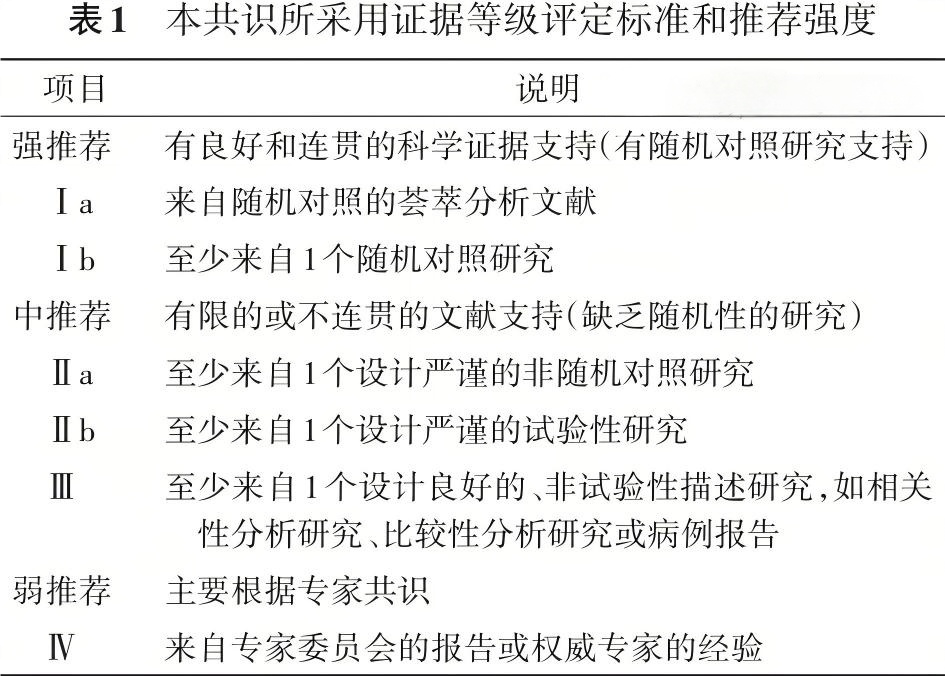
Table 1: Evidence Level Evaluation Criteria and Recommendation Strength Adopted in This Consensus
02 Stratified Population Management: Clarifying Contraindications and Suitability
A comprehensive clinical evaluation should be conducted before exercise, including monitoring vital signs such as blood pressure, heart rate, and blood glucose. Exercise programs should be adjusted according to gestational age and physical changes, avoiding contact sports, high-fall-risk activities, and high-altitude exercise.
❖ Absolute Contraindications: Severe cardiopulmonary diseases, severe preeclampsia, uncontrolled hypertension/type 1 diabetes mellitus, premature rupture of membranes, threatened preterm labor, persistent vaginal bleeding, etc. Moderate-to-high-intensity exercise is contraindicated for this population, and mild activities require evaluation by specialists.
❖ Relative Contraindications: Mild-to-moderate cardiopulmonary diseases, history of recurrent miscarriage, severe obesity (BMI≥35 kg/m²), twin pregnancy after 28 weeks of gestation, etc. Individualized programs should be formulated by professionals after comprehensively assessing risks and benefits.
❖ Population Without Contraindications: Regular exercise under professional guidance is recommended, with significant benefits and controllable safety.
Recommendation 2: For women with absolute contraindications to exercise during pregnancy, whether they can engage in mild physical activity or daily living activities should be determined after individualized evaluation by specialists. Women with relative contraindications should undergo a comprehensive risk-benefit assessment by professionals before participating in exercise programs, and individualized exercise plans should be developed. (Evidence Level: Ⅲ~Ⅳ, Weak Recommendation)
Recommendation 3: It is recommended that all pregnant women without contraindications to exercise during pregnancy conduct planned and regular exercise under the guidance of professionals. (Evidence Level: Ⅱa~Ⅲ, Moderate Recommendation)
03 Optimized Exercise Structure: Precisely Controlling Key Elements
1. Exercise Types: Aerobic + Resistance as the Mainstay, Complemented by Flexibility and Balance
❖ Aerobic Exercise (brisk walking, swimming, stationary cycling, etc.): Improves cardiopulmonary function, slows weight gain, reduces edema and fatigue, and facilitates childbirth.
❖ Resistance Exercise (resistance band training, aquatic resistance exercises, etc.): Enhances muscle strength and endurance, improves posture; excessive weight-bearing and breath-holding should be avoided.
❖ Flexibility and Balance Training (side leg raises against the wall, pelvic tilt exercises, etc.): Prevents falls and improves proprioception; high-difficulty and unstable movements are not recommended.
❖ High-risk sports such as horse riding and skiing should be avoided, and low-impact activities are preferred.
Recommendation 4: Exercise for pregnant women should be dominated by aerobic and resistance exercises, with moderate stretching exercises being beneficial. (Evidence Level: Ⅲ~Ⅳ, Weak Recommendation)
2. Frequency and Duration: Daily Persistence, Cumulative Compliance
Lack of exercise in the first trimester increases the risk of complications. Pregnant women without contraindications are advised to exercise daily; if not feasible, at least 3 days a week, with a cumulative total of no less than 150 minutes of moderate-intensity exercise, which can be completed in segments to avoid prolonged sitting.
Recommendation 5: Pregnant women should limit prolonged sitting. Replacing prolonged sitting with physical activity of any intensity (including mild intensity) is beneficial to health. (Evidence Level: Ⅳ, Weak Recommendation)
Recommendation 6: Pregnant women are encouraged to exercise daily; if not feasible, it is recommended to exercise at least 3 days a week, with a cumulative total of no less than 150 minutes of moderate-intensity exercise per week. (Evidence Level: Ⅱa~Ⅲ, Moderate Recommendation)
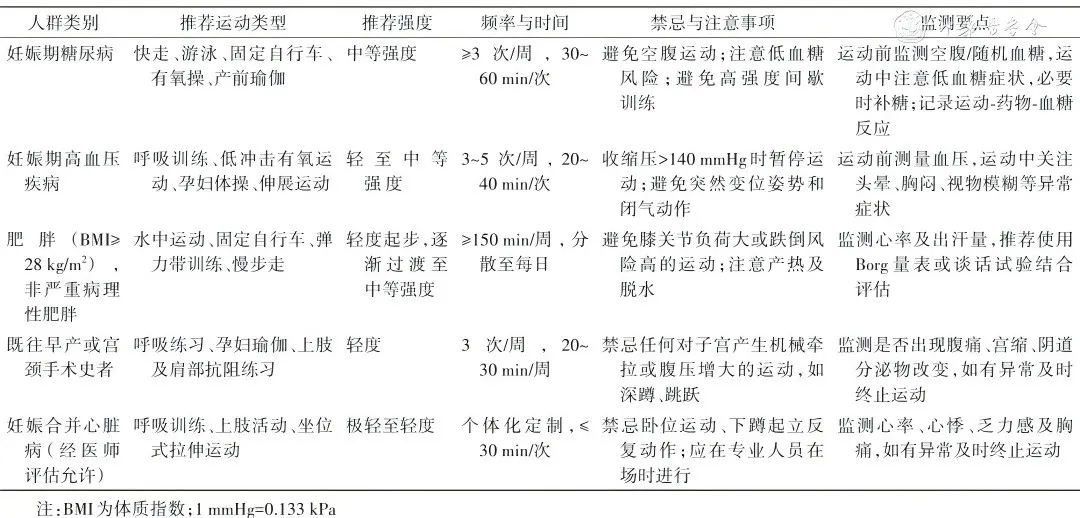
Table 2: Exercise Recommendations for Special Pregnant and Postpartum Populations
3. Exercise Intensity: Moderate Intensity as the Priority, Scientific Monitoring
Moderate-intensity exercise is recommended, corresponding to 13~14 points on the Borg Rating of Perceived Exertion (RPE) Scale ("somewhat strenuous"), and can be monitored using the "talk test" (ability to converse normally during exercise). Heart rate can be used as an auxiliary assessment (moderate-intensity heart rate: 125~146 beats per minute for women under 30 years old, 121~141 beats per minute for those aged 30 and above). High-intensity exercise should be avoided, and intensity should be further reduced for special populations.
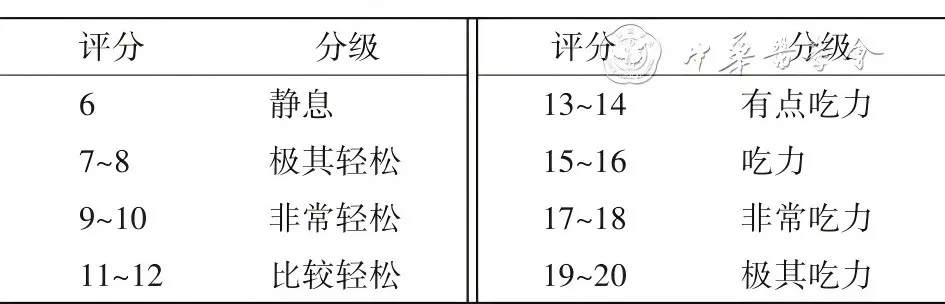
Table 3: Borg Rating of Perceived Exertion (RPE) Scale
Recommendation 7: Moderate-intensity exercise is recommended during pregnancy, i.e., a Rating of Perceived Exertion (RPE) score of 13~14. (Evidence Level: Ⅱa~Ⅱb, Moderate Recommendation)
4. Individualized Customization: Adapting to Individual Differences with Dynamic Adjustments
Based on the pregnant woman’s health status, gestational age, and complications, exercise programs should be formulated in accordance with the "six elements of exercise prescriptions" (frequency, intensity, type, duration, staging, monitoring) and adjusted across the first, second, and third trimesters. For special populations such as those with gestational diabetes mellitus or hypertension, targeted exercise plans should be developed, with enhanced monitoring of blood glucose and blood pressure.
Recommendation 8: Exercise plans should be individualized according to the needs of each pregnant woman. Recommendations on the type, frequency, duration, and intensity of exercise should be based on the pregnant woman’s medical and physical conditions. (Evidence Level: Ⅱa~Ⅲ, Moderate Recommendation)
04 Postpartum Exercise: Progressive Advancement Adapting to Recovery Rhythm
1. Timing of Initiation: Flexible Adjustment Based on Delivery Mode
❖ Vaginal Delivery: Mild exercise (walking, basic yoga) can be initiated 3 days after delivery; delayed for those with complications.
❖ Cesarean Section: Early bed and lower limb activities should be performed as soon as possible under safe conditions to prevent thromboembolism. Mild activities can be gradually resumed 2~3 weeks after delivery, and intensity can be increased after a favorable evaluation at the 6-week postnatal follow-up.
Recommendation 9: For women who delivered vaginally, mild exercise is recommended to start 3 days after delivery; for those who underwent cesarean section, daily activities should be resumed as soon as possible under safe conditions, and mild exercise can be gradually resumed 2~3 weeks after delivery. (Evidence Level: Ⅳ, Weak Recommendation)
2. Exercise Stages: Phased Progression with Safety First
❖ Early Stage (3 Days ~ 6 Weeks): Focus on restorative activities such as walking and deep breathing; strenuous exercise is avoided.
❖ Middle Stage (6 Weeks ~ 3 Months): Gradually increase the intensity of aerobic exercise, with emphasis on rectus abdominis diastasis (RAD) recovery.
❖ Late Stage (More Than 3 Months): Moderate-intensity exercise can be resumed, with the addition of strength training to improve body shape and physical fitness.
➱ The principle of "progressiveness" should be followed throughout. Adequate warm-up and cool-down should be performed before and after exercise. Exercise should be stopped immediately and medical advice sought if discomfort occurs.
Recommendation 10: Postpartum exercise should gradually increase in intensity, adhering to the principle of "progressiveness" to avoid overloading. Adjustments should be made flexibly according to the delivery mode and individual recovery status. (Evidence Level: Ⅱb~Ⅲ, Moderate Recommendation)
II. Clinical Application Prospect: Integration of Sports and Medicine to Safeguard Full-Cycle Health
This consensus provides systematic guidance for exercise in women during pregnancy and postpartum, but individual differences should be emphasized in clinical practice. Future research should focus on high-quality studies to explore the optimal exercise mode. With the deepening of the "integration of sports and medicine" concept, combined with technologies such as wearable devices and mobile health applications (mHealth apps), dynamic tracking of exercise behavior and precise intervention can be achieved, providing higher-quality support for the full-cycle health management of pregnant and postpartum women.
Source of Graphics and Text:
中华医学会围产医学分会, 国家体育总局体育科学研究所. 妊娠期与产后女性运动专家共识(2025版)[J]. 中华医学杂志, 2025, 105(40): 3634-3643. DOI: 10.3760/cma.j.cn112137-20250616-01467.
Editor: Huo Pan