Summary
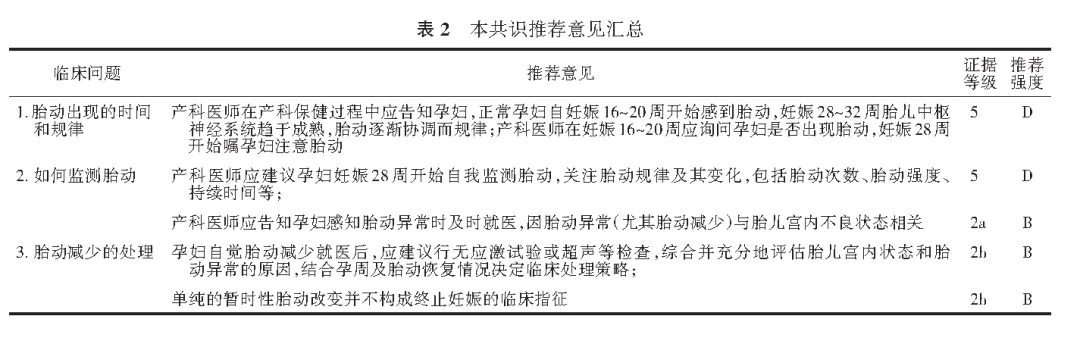
Pregnant women typically perceive fetal movements between 16–20 weeks of gestation. Multiple studies have shown that abnormal fetal movement after 28 weeks of gestation is associated with adverse perinatal outcomes. Fetal movement counting is one of the key methods for prenatal monitoring of fetal intrauterine status, helping to identify pathological pregnancies. Timely intervention for abnormal fetal movement is an important part of prenatal care, which can reduce the perinatal mortality rate. To standardize the management of fetal movement during pregnancy and improve pregnancy outcomes, the Perinatal Medicine Society of Chinese Medical Association and the Obstetrics Group of Gynecological and Obstetrical Society of Chinese Medical Association referenced relevant domestic and international academic guidelines and evidence-based medical evidence, organized discussions among national experts, and finally formulated 5 recommendations, aiming to provide a reference for clinical practice.
Monitoring fetal movement in the second and third trimesters is a simple and effective method to evaluate fetal intrauterine status, mainly through pregnant women’s self-counting of fetal movements. Abnormal fetal movement may be related to abnormal fetal intrauterine status caused by various pregnancy complications and comorbidities. However, the number of fetal movements is subjectively counted by pregnant women, which is affected by their cognition and judgment to a certain extent. Therefore, comprehensive consideration is needed when using fetal movement information for clinical decision-making and intervention. Regarding the management of fetal movement, the Perinatal Society of Australia and New Zealand and the International Stillbirth Alliance released the "Updated Clinical Practice Guidelines for the Management of Reduced Fetal Movement" in 2018 [1], but there is no domestic guideline or consensus specifically for fetal movement. Only China’s "Preconception and Prenatal Care Guidelines (2018)" [2] proposes paying attention to fetal movement starting from 28–32 weeks of gestation. Based on a comprehensive analysis of relevant domestic and international research results, the Perinatal Medicine Society of Chinese Medical Association and the Obstetrics Group of Gynecological and Obstetrical Society of Chinese Medical Association have reached a consensus on the normal range of fetal movement, methods of fetal movement monitoring, the necessity of fetal movement management, the handling of abnormal fetal movement, and the indicators for termination of pregnancy related to abnormal fetal movement, which is expected to further standardize the management of fetal movement during pregnancy in China.
Clinical Issues and Recommendations
Clinical Issue 1: Timing and Regularity of Fetal Movement Onset
Recommendation 1-1: Obstetricians should inform pregnant women during prenatal care that normal pregnant women begin to feel fetal movements between 16–20 weeks of gestation. The fetal central nervous system matures gradually between 28–32 weeks of gestation, and fetal movements become increasingly coordinated and regular. Obstetricians should inquire about whether pregnant women have perceived fetal movements at 16–20 weeks of gestation and advise them to pay attention to fetal movements starting from 28 weeks of gestation. (Evidence level: 5, Recommendation strength: D)
Fetal movement refers to the activities of the fetus in the pregnant woman’s uterus, including general body movements, simple limb movements, respiratory activities, head and neck movements, mandibular movements, etc. [3-4]. Starting from 20 weeks of gestation, fetal movements gradually form a diurnal rhythm, with peak activity in the afternoon and evening [5]. Sudden fetal breathing movements can be observed at 20–24 weeks of gestation, and paroxysmal and rhythmic fetal hiccups may occur as the gestational age increases. The fetal central nervous system matures gradually between 28–32 weeks of gestation, and fetal movements become increasingly coordinated and regular. By 32 weeks of gestation, the number of spontaneous fetal movements begins to increase gradually, and fetal movements can be observed from the pregnant woman’s abdomen. The fetus alternates between sleep and awake states, so fetal movements are periodic. When the fetus is in the "sleep" cycle, there is usually no fetal movement or only small-amplitude fetal movement, which can last for 20–40 minutes. Healthy fetuses rarely exceed 90 minutes [6-7], and an excessively long "sleep" cycle should be regarded as a pathological condition. A variety of physiological factors may affect fetal movements, such as gestational age, decreased or increased amniotic fluid volume, fetal position, placental location (e.g., anterior placenta), pregnant women’s physical activity or inattention during counting, and pregnant women’s posture (sitting or standing position).
Fetal movements can be observed by ultrasound as early as 7–8 weeks of gestation [8]. Pregnant women can perceive fetal movements at 16–20 weeks of gestation. The first perceived fetal movement is generally a "faint flutter". The fetal movements perceived by pregnant women account for 33%–88% of those shown by ultrasound examination [9], and approximately 50% of simple fetal limb movements and 80% of combined trunk and limb movements can generally be perceived [8]. Pregnant women’s perception of fetal movement marks the growth of the fetus’s size and strength.
China’s "Preconception and Prenatal Care Guidelines (2018)" [2] proposes that inquiries about fetal movement should be included in routine prenatal examinations from 20–24 weeks of gestation onwards, and pregnant women should be educated and guided to start paying attention to and counting fetal movements at 28–32 weeks of gestation. Obstetricians should inquire about whether pregnant women have perceived fetal movements during prenatal examinations at 16–20 weeks of gestation. The fetal central nervous system matures gradually between 28–32 weeks of gestation, and the musculoskeletal system also continues to develop and improve, making fetal movements increasingly coordinated and regular. Pregnant women should be advised to perform self-monitoring of fetal movements from 28 weeks of gestation onwards and pay attention to changes in fetal movements [2, 6].
Clinical Issue 2: Methods of Fetal Movement Monitoring
Recommendation 2-1: Obstetricians should advise pregnant women to start self-monitoring of fetal movements at 28 weeks of gestation, focusing on the regularity and changes of fetal movements, including the number, intensity, and duration of fetal movements. (Evidence level: 5, Recommendation strength: D)
Recommendation 2-2: Obstetricians should inform pregnant women to seek medical attention promptly when they perceive abnormal fetal movements, as abnormal fetal movements (especially reduced fetal movement) are associated with adverse fetal intrauterine status. (Evidence level: 2a, Recommendation strength: B)
Prenatal care providers should guide pregnant women to pay attention to and monitor fetal movements and assist them in perceiving normal fetal movement patterns. The method of fetal movement counting is: after 28 weeks of gestation, take the left lateral position (not supine), concentrate on counting accurately for 2 consecutive hours, and 10 or more fetal movements are considered satisfactory [10]. To avoid increasing pregnant women’s anxiety due to fetal movement counting, low-risk pregnant women can also be advised to perform relative counting of fetal movements, i.e., monitoring changes in the regularity of fetal movements, including the number, intensity, and timing of fetal movements. Reduced fetal movement refers to a change or decrease in the normal movement pattern of the fetus in the uterus [11]. If the number of fetal movements does not reach 10 within 2 hours of counting, further evaluation is required.
Pregnant women with reduced fetal movement have a higher proportion of primiparity, smoking, and obesity. Reduced fetal movement is often associated with adverse pregnancy outcomes such as fetal distress, fetal growth restriction, induction of labor, meconium staining, epidural anesthesia, umbilical cord entanglement, 5-minute Apgar score <7 in newborns, and even intrauterine fetal death [12]. Among cases of reduced fetal movement in the third trimester, 23% will have adverse outcomes, including fetal growth restriction, preterm birth, early term delivery (gestational age ≥37–<39 weeks), neonatal asphyxia, and emergency delivery [13-15]. Timely intervention for reduced fetal movement helps reduce the risk of adverse pregnancy outcomes such as fetal distress and intrauterine fetal death [10, 16-20]. Studies have shown that immediate intervention upon detection of reduced fetal movement triples the rate of intervention for reduced fetal movement and helps reduce the fetal mortality rate among pregnant women with reduced fetal movement (from 44/1,000 to 10/1,000) [21]. A 2020 meta-analysis included 5 randomized controlled trials comparing pregnancy outcomes between pregnant women who received fetal movement counting counseling (intervention group) and those who did not (control group). The results showed that the perinatal mortality rate was similar between the two groups (0.54% vs. 0.59%, RR=0.92, 95%CI: 0.85~1.00) [22]. A 2022 meta-analysis included 16 randomized controlled trials and 2 cohort studies, and found that simply encouraging fetal movement monitoring or combining it with clinical management could reduce the perinatal mortality rate compared with routine care (OR=0.88, 95%CI: 0.77~0.99) [23]. A prospective study in Norway included 2,313 third-trimester singleton pregnant women with reduced fetal movement. Some fetuses had died at the time of consultation, and the mortality rate of surviving fetuses was higher than that of other obstetric populations [24]. A case-control study in the United Kingdom evaluated maternal perception of fetal movement in the 2 weeks before intrauterine fetal death, including 291 cases of intrauterine fetal death and 733 gestational age-matched controls. The results found that reduced fetal movement was associated with an increased risk of intrauterine fetal death (aOR=4.51, 95%CI: 2.38~8.55) [25]. Studies have found that among pregnant women with reduced fetal movement, combined fetal growth restriction is associated with an increased risk of adverse outcomes [13]. In addition, the "Updated Clinical Practice Guidelines for the Management of Reduced Fetal Movement" released by the Perinatal Society of Australia and New Zealand in 2018 emphasizes paying attention to pregnant women’s complaints. Pregnant women’s concerns about reduced fetal movement need to be taken seriously and comprehensively evaluated, and this concern may be more strongly associated with adverse pregnancy outcomes than reduced fetal movement itself [1]. Compared with pregnant women who experience reduced fetal movement only once, those who experience reduced fetal movement twice or more have a higher risk of adverse pregnancy outcomes (including fetal growth restriction, preterm birth, or intrauterine fetal death); 55% of pregnant women with intrauterine fetal death reported reduced fetal movement before diagnosis [11].
In summary, pregnant women should be informed to seek medical attention immediately when they experience reduced fetal movement. If a pregnant woman is concerned about reduced fetal movement, or if the average number of fetal movements decreases by >50% and does not recover, doctors should attach great importance to it and assess the pregnancy status and fetus as soon as possible.
Clinical Issue 3: Management and Regularity of Reduced Fetal Movement
Recommendation 3-1: After a pregnant woman seeks medical attention due to perceived reduced fetal movement, non-stress test (NST) or ultrasound examination should be recommended to comprehensively and fully evaluate the fetal intrauterine status and the causes of abnormal fetal movement. The clinical management strategy should be determined based on the gestational age and the recovery of fetal movement. (Evidence level: 2b, Recommendation strength: B)
Recommendation 3-2: Isolated temporary changes in fetal movement do not constitute a clinical indication for termination of pregnancy. (Evidence level: 2b, Recommendation strength: B)
In the clinical management process, when a pregnant woman experiences reduced fetal movement multiple times, prenatal care providers should upgrade the pregnancy risk level from low risk to high risk [26]. They should review her medical history and treatment records, comprehensively assess the maternal and fetal risk factors combined with information before and after admission, and consider the pregnant woman’s cognitive level and judgment basis for reduced fetal movement, the duration of reduced fetal movement before admission, and the number of episodes of reduced fetal movement. Corresponding treatment plans should be formulated based on the evaluation results, including: (1) When a pregnant woman complains of reduced fetal movement, prenatal care providers should immediately auscultate the fetal heart rate and perform an ultrasound examination [27]; (2) Perform NST in the third trimester and conduct clinical management based on the fetal heart rate monitoring results [28]; (3) Conduct biophysical profile (BPP) examination if conditions permit to assist in further evaluating the fetal intrauterine status [29]. If a pregnant woman experiences occasional reduced fetal movement followed by recovery of normal fetal movement, routine prenatal examinations can be resumed, but the pregnant woman should be guided to continue monitoring fetal movements. At least 40% of pregnant women have one or more concerns about reduced fetal movement, but most cases of reduced fetal movement are transient [30]. Causes of temporary reduced fetal movement include: fetal sleep, maternal use of placenta-crossing drugs (such as sedatives), or maternal smoking. Fetal sleep is a common physiological cause of reduced fetal movement. The sleep cycle can last up to 40 minutes [31]. Approximately 70% of pregnant women with perceived reduced fetal movement have uneventful pregnancy outcomes. Isolated changes in fetal movement do not constitute a clinical indication for termination of pregnancy.
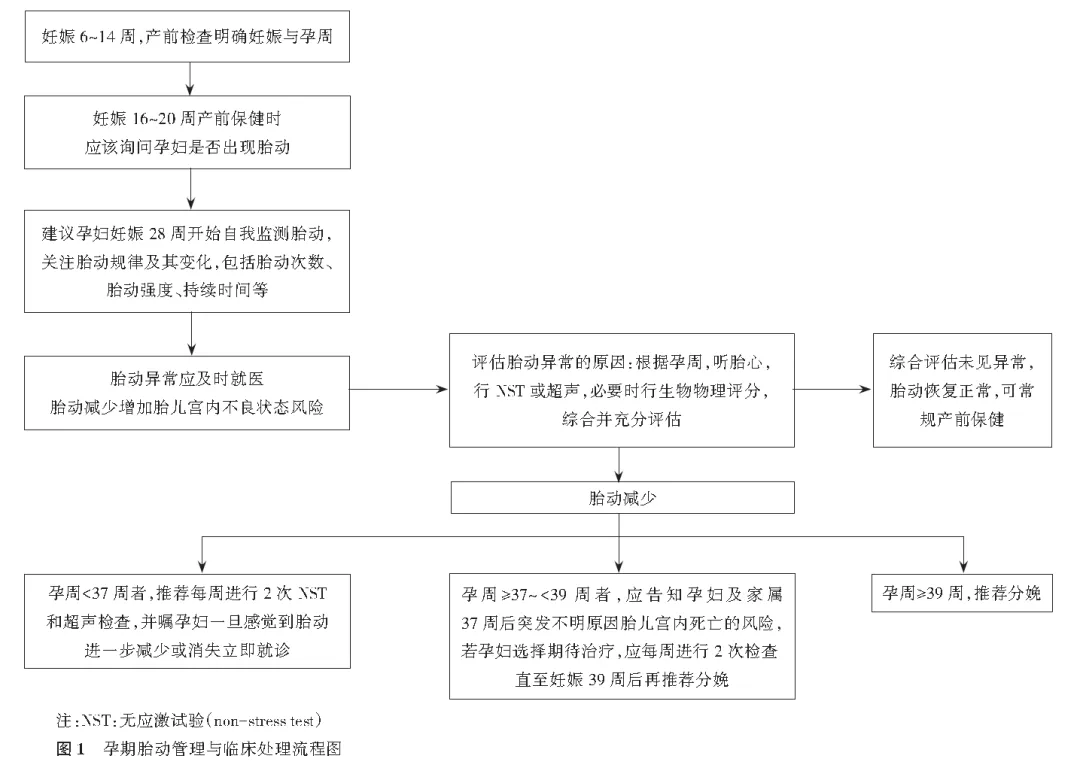
Maternal outcomes related to abnormal fetal movement include cesarean section and induction of labor, while fetal outcomes include low birth weight, small gestational age at birth, hypoxic-ischemic encephalopathy, neonatal death, neonatal intensive care admission, perinatal death, preterm birth, and stillbirth [32]. Whether a pregnant woman with reduced fetal movement requires termination of pregnancy depends on the gestational age, changes in fetal movement, and the presence of pregnancy complications [26]. For pregnant women with reduced fetal movement at ≥39 weeks of gestation, delivery is recommended; for those at <37 weeks of gestation, twice-weekly NST and ultrasound examinations are recommended, and the pregnant woman should be advised to seek medical attention immediately if she feels further reduction or disappearance of fetal movement; for those at ≥37–<39 weeks of gestation, the pregnant woman and her family should be informed of the risk of sudden unexplained intrauterine fetal death after 37 weeks of gestation. If the pregnant woman chooses expectant management, twice-weekly examinations should be performed until 39 weeks of gestation, after which delivery is recommended again [26].
In summary, fetal movement monitoring is a simple and effective method for pregnant women to self-evaluate fetal intrauterine status, but it is greatly affected by pregnant women’s subjective feelings. Currently, there is no authoritative domestic guideline to guide clinical fetal movement management, leading to many problems in the monitoring and management of fetal movement in clinical practice. Through reaching a consensus on the normal range of fetal movement, methods of fetal movement monitoring, the necessity of fetal movement management, the handling of abnormal fetal movement, and the indicators for termination of pregnancy related to abnormal fetal movement, this consensus proposes a process for fetal movement management and clinical handling during pregnancy (Figure 1), which is expected to further strengthen doctor-patient cooperation, detect fetal abnormalities as early as possible, thereby reducing the occurrence of adverse pregnancy outcomes and safeguarding the smooth birth of more new lives.
References:
[1]Daly LM, Gardener G, Bowring V, et al. Care of pregnant women with decreased fetal movements: Update of a clinical practice guideline for Australia and New Zealand[J]. Aust N Z J Obstet Gynaecol, 2018,58(4):463-468. DOI: 10.1111/ajo.12762.
[2] 中华医学会妇产科学分会产科学组. 孕前和孕期保健指南(2018)[J]. 中华围产医学杂志,2018,21(3):145-152. DOI:10.3760/cma.j.issn.1007-9408.2018.03.001.
Obstetrics Subgroup, Chinese Society of Obstetrics and Gynecology, Chinese Medical Association. Guideline of preconception and prenatal care (2018) [J]. Chin J Perinat Med, 2018,21(3):145-152. DOI:10.3760/cma.j.issn.1007-9408. 2018.03.001.
[3]郭晓玥, 邵珲, 王妍, 等. 胎儿缺氧的妊娠期监测[J].中国妇产科临床杂志,2017,18(4):366-368. DOI: 10.13390/j.issn.1672- 1861.2017.04.023.
Guo XY, Shao H, Wang Y, et al. Antenatal surveillance for fetal hypoxia[J]. Chin J Clin Obstet Gynecol,2017,18(4):366-368. DOI: 10.13390/j.issn.1672-1861.2017.04.023.
[4]Nowlan NC. Biomechanics of foetal movement[J]. Eur Cell Mater, 2015,29:1-21; discussion 21. DOI: 10.22203/ecm.v029a01.
[5] Patrick J, Campbell K, Carmichael L, et al. Patterns of gross fetal body movements over 24-hour observation intervals during the last 10 weeks of pregnancy[J]. Am J Obstet Gynecol, 1982,142(4):363-371. DOI: 10.1016/s0002-9378(16)32375-4.
[6]Royal College of Obstetricians & Gynaecologists. Reduced fetal movements. Green-top Guideline No. 57[EB/OL]. 2011 [2025-04-03]. https://www.rcog.org.uk/.
[7] Velazquez MD, Rayburn WF. Antenatal evaluation of the fetus using fetal movement monitoring[J]. Clin Obstet Gynecol, 2002,45(4):993-1004. DOI: 10.1097/00003081-200212000-00006.
[8]de Vries JI, Fong BF. Normal fetal motility: an overview[J]. Ultrasound Obstet Gynecol, 2006,27(6):701-711. DOI: 10.1002/uog.2740.
[9]Hijazi ZR, East CE. Factors affecting maternal perception of fetal movement[J]. Obstet Gynecol Surv, 2009,64(7):489-497; quiz 499. DOI: 10.1097/OGX.0b013e3181a8237a.
[10]刘春雨, 赵扬玉. 胎动的监测及临床意义[J].实用妇产科杂志,2019,35(12):881-883.
Liu CY, Liu YY. Fetal movement surveillance in pregnancy and its clinical significance[J].J Pract Obstet Gynecol,2019,35(12):881-883.
[11]Jakes AD, Whybrow R, Spencer C, et al. Reduced fetal movements[J]. BMJ, 2018,360:k570. DOI: 10.1136/bmj.k570.
[12]Carroll L, Gallagher L, Smith V. Risk factors for reduced fetal movements in pregnancy: a systematic review and meta-analysis[J]. Eur J Obstet Gynecol Reprod Biol, 2019,243:72-82. DOI: 10.1016/j.ejogrb.2019.09.028.
[13]Turner JM, Flenady V, Ellwood D, et al. Evaluation of pregnancy outcomes among women with decreased fetal movements[J]. JAMA Netw Open, 2021,4(4):e215071. DOI: 10.1001/jamanetworkopen.2021.5071.
[14]Frøen JF, Tveit JV, Saastad E, et al. Management of decreased fetal movements[J]. Semin Perinatol,2008,32(4):307-311. DOI:10.1053/j.semperi.2008.04.015.
[15]Dutton PJ, Warrander LK, Roberts SA, et al. Predictors of poor perinatal outcome following maternal perception of reduced fetal movements--a prospective cohort study[J]. PLoS One, 2012,7(7):e39784. DOI: 10.1371/journal.pone.0039784.
[16]南子晴,胡娅莉.胎动监测意义的再评估[J].中国实用妇科与产科杂志,2019,35(4):399-403.DOI:10.19538/j.fk2019040109.
Nan ZQ, Hu YL. Re-evaluation of the clinical significance of fetal movement monitoring[J]. Chin J Pract Gynecol Obstet, 2019, 35(4): 399-403. DOI:10.19538/j.fk2019040109.
[17]秦田瑞, 陶峰, 陈红波. 158例妊娠晚期死胎原因分析[J].中国妇幼健康研究,2018,29(11):1479-1483. DOI: 10.3969/j.issn. 1673-5293.2018.11.029.
Qin TR, Tao F, Chen HB. Causes of stillbirth in 158 cases during third trimester of pregnancy[J].Chin J Women Child Health Res, 2018,29(11):1479-1483. DOI: 10.3969/j.issn.1673-5293.2018. 11.029.
[18]徐美容. 100例死胎病因分析及预防措施[J].中国妇幼保健,2018,33(21):4840-4843. DOI: 10.7620/zgfybj.j.issn.1001-4411. 2018.21.12.
Xu MR. Analysis of the causes of 100 cases of stillbirth and preventive measures[J].Mater Child Health Care Chin,2018,33(21):4840-4843. DOI: 10.7620/zgfybj.j.issn.1001-4411.2018. 21.12.
[19]王爽,杨慧霞. 17年间105例胎死宫内孕妇的临床分析[J]. 中华妇产科杂志,2017,52(12):818-821. DOI:10.3760/cma.j.issn.0529-567x.2017.12.005.
Wang S, Yang HX. Clinical analysis of 105 intrauterine fetal deaths in 17 years[J]. Chin J Obstet Gynecol, 2017,52(12):818-821. DOI:10.3760/cma.j.issn.0529-567x.2017.12.005.
[20]陈路萍,张永清,张佳玲,等.胎动异常患者发生不良预后结局的相关因素分析[J].浙江医学,2019,41(9):912-915+923.
Chen LP, Zhang YQ, Zhang JL, et al. Risk factors of adverse perinatal outcomes related to abnormal fetal movement[J]. Zhejiang Med J, 2019,41(9):912-915+923.
[21] Moore TR, Piacquadio K. A prospective evaluation of fetal movement screening to reduce the incidence of antepartum fetal death[J]. Am J Obstet Gynecol, 1989,160(5 Pt 1):1075-1080. DOI: 10.1016/0002-9378(89)90164-6.
[22]Bellussi F, Po' G, Livi A, et al. Fetal movement counting and perinatal mortality: a systematic review and meta-analysis[J]. Obstet Gynecol, 2020,135(2):453-462. DOI: 10.1097/AOG. 0000000000003645.
[23]Hayes D, Dumville JC, Walsh T, et al. Effect of encouraging awareness of reduced fetal movement and subsequent clinical management on pregnancy outcome: a systematic review and meta-analysis[J]. Am J Obstet Gynecol MFM, 2023,5(3):100821. DOI: 10.1016/j.ajogmf.2022.100821.
[24]Tveit JV, Saastad E, Bordahl PE, et al. The epidemiology of decreased fetal movements[C]//Proceedings of the Norwegian Perinatal Society Conference. 2006.
[25]Heazell A, Budd J, Li M, et al. Alterations in maternally perceived fetal movement and their association with late stillbirth: findings from the Midland and North of England stillbirth case-control study[J]. BMJ Open, 2018,8(7):e020031. DOI: 10.1136/bmjopen-2017-020031.
[26]Fretts R. Decreased fetal movement: diagnosis, evaluation, and management [EB/OL]. [ 2025-04-03 ]. https://www.uptodate.cn/contents / decreased- fetal- movement- diagnosis- evaluation-and-management.
[27]Heazell AE, Bernatavicius G, Roberts SA, et al. A randomised controlled trial comparing standard or intensive management of reduced fetal movements after 36 weeks gestation--a feasibility study[J]. BMC Pregnancy Childbirth, 2013,13:95. DOI: 10.1186/1471-2393-13-95.
[28]Frøen JF, Saastad E, Tveit JV, et al. [Clinical practice variation in reduced fetal movements][J]. Tidsskr Nor Laegeforen, 2005,125(19):2631-2634.
[29] Heazell AE, Sumathi GM, Bhatti NR. What investigation is appropriate following maternal perception of reduced fetal movements?[J]. J Obstet Gynaecol, 2005,25(7):648-650. DOI: 10.1080/01443610500278303.
[30]Saastad E, Winje BA, Israel P, et al. Fetal movement counting--maternal concern and experiences: a multicenter, randomized, controlled trial[J]. Birth, 2012,39(1):10-20. DOI: 10.1111/j.1523-536X.2011.00508.x.
[31]Pillai M, James D. The development of fetal heart rate patterns during normal pregnancy[J]. Obstet Gynecol, 1990,76(5 Pt 1):812-816. DOI: 10.1097/00006250-199011000-00017.
Graphic source:中华医学会围产医学分会, 中华医学会妇产科学分会产科学组. 胎动管理专家共识(2025)[J]. 中华围产医学杂志, 2025, 28(10): 817-822. DOI: 10.3760/cma.j.cn113903-20250630-00350.
Editor: Huo Pan