
The umbilical cord plays a vital role in fetal development, serving as a critical pathway for gas exchange, nutrient supply, and elimination of metabolic waste between the mother and the fetus. Umbilical cord abnormalities may impair fetal health, with congenital anomalies associated with an increased risk of pregnancy and perinatal complications. However, in routine prenatal ultrasound examinations, the umbilical cord does not receive the same level of attention as the fetus itself—its assessment lacks standardization and is not included in training programs.
How should clinicians diagnose and identify umbilical cord abnormalities when detected? Which abnormalities are associated with fetal congenital diseases and genetic disorders? What severe consequences can abnormal umbilical cord insertion cause to the fetus? What hazards does it pose during pregnancy, and what long-term impacts will it have? What causes abnormal umbilical cord blood flow? We will explore these questions from the following aspects.
PART 01 Emphasizing the Importance of the Umbilical Cord in Prenatal Examinations
The umbilical cord is a direct continuation of the fetal cardiovascular system, with its core function being to ensure a flexible transport system: delivering oxygen and nutrients, and removing carbon dioxide and other metabolic waste. Umbilical cord abnormalities may impair fetal oxygenation and oxygen supply, which in turn leads to short-term and long-term adverse outcomes, increasing perinatal morbidity (e.g., cerebral palsy) and mortality [1,2].
Some congenital umbilical cord abnormalities are also associated with various fetal structural defects and genetic diseases. However, in routine prenatal ultrasound, the umbilical cord has never received the same attention as fetal structural screening [3,4]. In developed countries, 1 in every 200 pregnant women experiences stillbirth after 20 weeks of gestation, and placental and umbilical cord abnormalities are currently believed to account for approximately 30% of the risk factors for fetal death in utero (IUFD) [5,6]. Cerebral palsy cases related to intrapartum hypoxia-ischemia account for 14.5% [7]. Some cases of cerebral palsy may be caused by prenatal acute umbilical cord compression and insufficient fetal-placental perfusion. When thrombosis forms in the fetal-placental circulatory system, it triggers a fibrotic villous aggregation pattern known as Fetal Thrombotic Vasculopathy (FTV), which often results in severe neonatal injury, particularly brain damage. Notably, there is a significant association between FTV and umbilical cord abnormalities in cerebral palsy cases [8].
(1) 2018 Study Published in Placenta
Dr. Junichi Enohara from the Department of Obstetrics and Gynecology, Tokyo Maria University School of Medicine, published an article titled "Ultrasonographic Screening for Umbilical Cord Abnormalities and Management During Delivery" in the SCI journal Placenta:

Source: Placenta
The article states: With advancements in prenatal fetal diagnosis technology, the incidence of stillbirth due to fetal malformations after the second trimester has decreased, while the incidence of stillbirth related to umbilical cord factors has tended to increase. Prenatal detection of umbilical cord abnormalities and appropriate management based on ultrasound diagnosis during the prenatal period and delivery process can reduce perinatal morbidity and mortality. Combining current research findings on the pathophysiological mechanisms of umbilical cord abnormalities, the article discusses strategies to reduce the incidence of fetal distress caused by umbilical cord issues.
(2) 2024 Consensus by the European Association of Perinatal Medicine (EAPM)
In 2024, the Special Interest Group of the European Association of Perinatal Medicine (EAPM) developed the "Consensus on Placental and Umbilical Cord Abnormalities" [9]. The purpose of this consensus is to emphasize that: Routine obstetric ultrasound physicians must understand the types, epidemiology, second-trimester ultrasound manifestations, clinical significance of detailed fetal structural screening, and management of congenital umbilical cord abnormalities. Healthcare providers should receive training on how to communicate these findings to patients without causing excessive anxiety, and collaborate in perinatal screening and management to achieve optimal perinatal outcomes.
(3) 2025 Article in Radiographics
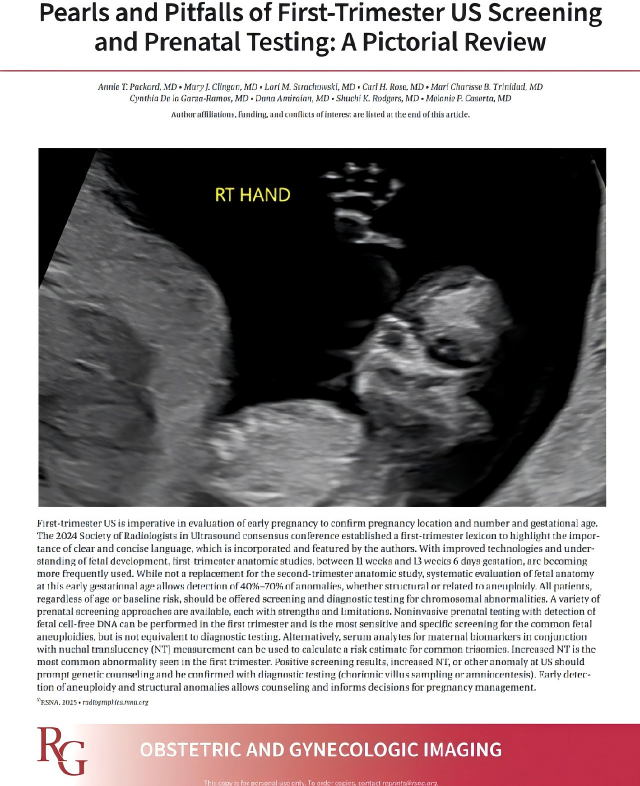
In 2025, the Radiological Society of North America (RSNA) published an article titled "Key Points and Pitfalls in First-Trimester Ultrasonographic Screening and Prenatal Examinations: An Imaging Review" in the journal Radiographics:
Source: Radiographics
The article points out: Ultrasonography in the first trimester is essential for evaluating early pregnancy, aiming to determine the location, number, and gestational age of the pregnancy. With technological advancements and deeper understanding of fetal development, anatomical assessment in the first trimester (from 11 weeks to 13 weeks and 6 days) is becoming increasingly common. Although it cannot replace second-trimester anatomical assessment, systematic evaluation of fetal anatomy at this earlier gestational age can detect 40% to 70% of abnormalities, both structural and those associated with chromosomal aneuploidy. An important part of this assessment also includes examination of the umbilical cord.
PART 02 Types of Umbilical Cord Abnormalities
The umbilical cord develops from the yolk sac and allantois. The embryology of the umbilical cord, fetal digestive tract, and amniotic membrane is interrelated. Approximately 2 weeks after fertilization, the embryonic disc surrounds the small developing amniotic sac, with the part facing the chorion differentiating into the placenta in the future. The primary yolk sac appears opposite the embryo, and these structures are surrounded by extraembryonic mesoderm, which fills the remaining part of the gestational sac. In the third week, the mesoderm forms a cavity, except for a bridge-like structure called the body stalk, which connects the embryo, amniotic membrane, and yolk sac to the outer membrane of the chorion—this body stalk develops into the umbilical cord. In the fourth week of the menstrual cycle, the blastocyst implants into the endometrium.
A normal umbilical cord has a diameter of approximately 0.8 cm to 2 cm and contains three blood vessels: one thick-walled, thin-diameter umbilical vein, and two thin-walled, thick-diameter umbilical arteries. These three blood vessels are surrounded by a matrix substance called Wharton's Jelly, which plays a crucial role in protecting the vessels.
Umbilical cord abnormalities may be related to the fetal origin of the umbilical cord, its insertion site, the number of contained blood vessels, the length, spiraling, and entanglement of the cord, as well as various local umbilical cord injuries.
01 Developmental Abnormalities
1. Abnormal Umbilical Cord Length
At term, the umbilical cord length ranges from 30 cm to 100 cm (average 55 cm) with a diameter of approximately 0.8 cm to 2.0 cm.
(1) Excessively Short Cord: Shorter than 30 cm. Usually, there are no abnormal manifestations during pregnancy, but during labor, as the fetus descends, the cord is excessively stretched, affecting fetal blood circulation, which can lead to hypoxia and abnormal fetal heart rate. In severe cases, it may cause placental abruption. Obstructed fetal descent can also result in prolonged labor.
(2) Excessively Long Cord: Longer than 100 cm. An excessively long cord is prone to nuchal cord, body entanglement, knotting, prolapse, or compression.
2. Abnormal Umbilical Cord Insertion
(1) Marginal Umbilical Cord Insertion (Battledore Placenta): The umbilical cord attaches to the edge of the placenta, appearing like a battledore in shape.
(2) Velamentous Cord Insertion (VCI): Umbilical cord blood vessels enter the placenta through the space between the amniotic membrane and chorion, resembling a ship's sail. Since the vessels lack Wharton's Jelly protection and are only wrapped by the amniotic membrane, they are susceptible to external factors. VCI is classified as an umbilical cord disorder.
(3) Vasa Previa (VP): Fetal blood vessels running between the amniotic membranes cover or are close to the internal cervical os, lying in front of the fetal presenting part. Due to the lack of Wharton's Jelly protection, the previa vessels are vulnerable to compression by the fetal presenting part during uterine contractions or rupture when the membranes break, potentially leading to fatal fetal blood loss.
3. Abnormal Number of Umbilical Vessels
Single Umbilical Artery (SUA): A normal umbilical cord contains one umbilical vein and two umbilical arteries; the presence of only one artery is referred to as SUA [9]. It is further classified into primary and secondary SUA.
(1) Primary SUA: May be associated with fetal structural or chromosomal abnormalities, requiring close monitoring for exclusion.
(2) Secondary SUA: Refers to the secondary obstruction or atrophy of one of the two originally normal umbilical arteries during pregnancy, resulting in only one umbilical artery and one umbilical vein remaining in the cord.
02 Umbilical Cord Vascular Diseases and Tumors
1. Umbilical Cord Hematoma, Edema, and Cysts (Umbilical Cord Cyst, UCC)
The incidence in the first trimester is 0.4% to 3.4%, which can be divided into true cysts and pseudocysts.
(1) Pseudocyst: More common, usually located at the fetal insertion end of the umbilical cord. It is caused by local edema of Wharton's Jelly or mucus accumulation in the cyst cavity formed by local degeneration, with no epithelial covering on the surface.
(2) True Cyst: Contains an epithelial lining, usually a remnant of the allantoic duct; less commonly, a remnant of the omphalomesenteric duct.
(3) Umbilical Cord Hematoma: A cystic-dominant mixed echo mass within the umbilical cord with poor sound transmission, showing patchy and flocculent medium-to-high echoes alternating with anechoic areas, with visible deformation on dynamic observation. Color Doppler shows no blood flow signal in the mixed echo area, with umbilical cord blood flow visible around it.
2. Umbilical Cord Tumors
(1) Teratoma: Only a few cases have been reported to date. If three germ layers are identified and the location is close to the umbilical cord insertion site, differential diagnosis should consider acardiac amorphous teratoma or heteropagus conjoined twins. Ultrasound manifestations vary depending on the internal components, which can be cystic, solid-cystic, or solid. When calcification is present in the lesion, teratoma should be prioritized.
(2) Angiomyxoma: A rare tumor, usually benign but may be associated with fetal death. It presents as a heterogeneous solid mass.
(3) Umbilical Vein Varix: Diagnosis can be considered when the umbilical vein diameter > 9 mm or the extrahepatic segment of the umbilical vein is more than 50% wider than the intrahepatic segment. Color Doppler shows venous blood flow signal in the lumen with detectable increased flow velocity.
(4) Umbilical Cord Hemangioma: Rare, often located inside the umbilical cord near the placental insertion site, and can be diagnosed as early as 16 weeks. Enlargement of the hemangioma within the umbilical cord can impair umbilical circulation, leading to fetal death. Polyhydramnios is also a common feature. If located at the fetal umbilical cord insertion site, it may be misdiagnosed as omphalocele.
03 Mechanical and Functional Lesions
1. Umbilical Cord Presentation and Prolapse
(1) Umbilical Cord Presentation: Before rupture of the membranes, the umbilical cord is located in front of or beside the fetal presenting part.
(2) Umbilical Cord Prolapse: After rupture of the membranes, the umbilical cord protrudes outside the cervical os, descends into the vagina, or even exposes outside the vulva, with an incidence of 0.4%-10%. It may lead to fetal ischemia and hypoxia, requiring emergency cesarean section.
2. Umbilical Cord Entanglement
Most commonly, nuchal cord, accounting for approximately 20% of all deliveries. Causes include excessively long cord, small fetus, polyhydramnios, and frequent fetal movements. The impact depends on the tightness and number of entanglements; severe cases can lead to fetal distress.
3. Umbilical Cord Knotting
(1) False Knot: Formed by curling or tortuosity of umbilical blood vessels, usually harmless.
(2) True Knot: Formed when the fetus passes through a loop of the umbilical cord. When tightened, it can obstruct fetal blood circulation, even leading to intrauterine fetal death.
4. Umbilical Cord Torsion
Fetal movements can cause the umbilical cord to twist spirally along its longitudinal axis, with physiological torsion reaching 6-11 turns. Excessive umbilical cord torsion is defined as > 12 turns, with an interval between two spirals < 2 cm, or a spiral index ≥ 0.37 as indicated by ultrasound. Excessive torsion can affect umbilical cord blood circulation, thereby impairing nutrient and oxygen supply, potentially leading to fetal growth restriction (FGR) and fetal distress. Severe torsion can cause the cord to thin and become thread-like necrotic near the fetal umbilicus, leading to vascular occlusion or thrombosis, and fetal death due to interrupted blood supply.
5. Changes in Umbilical Artery Systolic/Diastolic (S/D) Ratio
The S/D ratio refers to the ratio of the peak systolic velocity (S) to the end-diastolic velocity (D) of the umbilical artery. It is an important indicator for evaluating the placenta's ability to supply blood to the fetus through the umbilical cord.
PART 03 Screening, Diagnosis, and Management of Congenital Umbilical Cord Abnormalities
Congenital umbilical cord abnormalities increase the risk of pregnancy and perinatal complications. The most common umbilical cord abnormalities are single umbilical artery (SUA) and velamentous cord insertion (with or without vasa previa), which increase the risk of adverse perinatal outcomes, including fetal growth restriction and stillbirth. Some abnormalities are associated with fetal malformations, such as umbilical cord cysts and non-isolated SUA. Some mechanical changes directly reflect and monitor the fetal intrauterine status.
01 Abnormal Umbilical Cord Insertion
1. Velamentous Cord Insertion (VCI)
VCI refers to the umbilical cord inserting into the amniotic membrane and passing through the membrane (between the amnion and chorion) to enter the placental tissue; that is, the fetal umbilical cord blood vessels attach to the amniotic membrane outside the placenta, with the umbilical blood vessels running fan-shaped between the amnion and chorion (no placental tissue covers the area around the velamentous cord insertion). It lacks umbilical cord jelly, has no umbilical cord spiraling, and carries a risk of rupture. The incidence is 0.24% to 1.8%. Multiple pregnancy is a high-risk factor for VCI, more common in monochorionic twin or multiple pregnancies, accounting for approximately 8.7% in multiple pregnancies.
➱ Core Risks:The "floating" blood vessels of velamentous insertion are prone to forming vasa previa (VP). Previa vessels are susceptible to rupture and bleeding when the membranes break. Even a small amount of bleeding can cause fetal hypoxia, distress, or even death, with a higher risk during labor. Additionally, during labor, the velamentous umbilical cord may rupture or tear due to traction or compression, increasing the risk of fetal hypoxia and intrapartum bleeding.
➱ Etiology:A widely accepted theory is the "trophotropism" theory, which suggests that the decidua capsularis has the richest blood supply, where the body stalk originates. As pregnancy progresses, the area with abundant blood supply shifts to the decidua basalis, while the body stalk remains in place, and the chorion there atrophies into the smooth chorion, resulting in VCI. Some scholars also believe that mechanical factors in the uterus or competition for space among embryonic cell masses in multiple pregnancies cause the placenta to grow away from its original center, leading to VCI.
➱ Impact on the Fetus:Pregnancies with velamentous cord insertion are at risk of fetal growth restriction, fetal arrhythmia, preterm birth, congenital malformations, fetal bleeding, intrauterine fetal hypoxia, and fetal death. The reasons are as follows:
(1) Fetal Growth Restriction: The umbilical cord blood vessels of velamentous placenta lack Wharton's Jelly protection and are prone to compression, leading to insufficient fetal blood supply, limited nutrient and oxygen supply, which affects fetal growth and development, resulting in growth restriction and low birth weight.
(2) Fetal Arrhythmia: When umbilical cord blood vessels are compressed, fetal blood return decreases, followed by complete obstruction of the umbilical artery and vein, leading to increased systemic blood pressure and decreased fetal heart rate in the fetus, resulting in arrhythmic manifestations such as variable decelerations of fetal heart rate.
(3) Congenital Malformations: The formation of velamentous placenta may be related to local deformation. Some studies suggest an association with fetal malformations, but not all velamentous placentas lead to fetal malformations.
(4) Placental Abruption: The abnormal course of blood vessels in velamentous placenta, lack of Wharton's Jelly protection, makes them prone to rupture due to external forces or uterine contractions. After vascular tearing, blood seeps between the placenta and the uterine wall, leading to partial or complete placental abruption. Placental abruption directly threatens fetal life and requires emergency termination of pregnancy.
➱ Prenatal Management of Velamentous Placenta:Early diagnosis by ultrasound and dynamic assessment of fetal status are required. Avoid strenuous activities during pregnancy, and monitor fetal movements and signs of bleeding. Velamentous placenta is not an indication for cesarean section. For vaginal delivery, close monitoring of fetal heart rate changes is necessary, and the mode of delivery should be changed promptly if abnormalities occur. For termination of pregnancy by cesarean section:
2. Vasa Previa (VP)
Vasa previa was first reported and named by Benckiser in 1831. Recent foreign literature reports an incidence of VP ranging from 1/1200 to 1/5000 [11], while the incidence is significantly higher in patients with pregnancies conceived through assisted reproductive technology, reaching 1/365 to 1/700 [12,13].
➱ Definition:In velamentous placenta, blood vessels running between the amniotic membranes cover or are close to the internal cervical os, lying in front of the fetal presenting part. The previa vessels lack Wharton's Jelly protection and are vulnerable to compression by the fetal presenting part during uterine contractions or rupture when the membranes break, leading to obstruction of umbilical blood circulation, fetal blood loss, fetal distress, or even sudden death. A single rupture can cause fetal blood loss accounting for 20% to 40% of the total blood volume, with a mortality rate as high as 60%.
➱ Diagnostic Criteria:Strip-shaped vascular echoes above the internal cervical os, with the lower edge ≤ 20 mm from the internal cervical os, lack of spiraling in the vessels, no umbilical cord jelly covering the surface, fixed position. Color Doppler flow imaging (CDFI) shows full blood flow signal, and pulsed Doppler shows a frequency consistent with the fetal heart rate. Transvaginal ultrasound is an essential method for diagnosing VP. Combined with color Doppler, all cases of VP in the second trimester can be diagnosed (sensitivity 100%, specificity 99.0% to 99.8%) [14].
➱ Classification:Type I: Velamentous placental insertion, with unprotected blood vessels passing through or close to the internal cervical os, accounting for 89.5% of VP cases;
Type II: Bilobed, multilobed, or succenturiate placenta, with unprotected fetal blood vessels between the lobes close to the internal cervical os.
In 2023, the Society of Obstetricians and Gynecologists of Canada (SOGC) issued the Clinical Practice Guideline for the Diagnosis and Management of Vasa Previa, adding Type III and Type IV to the original Type I and Type II [15]:
Type III: Unprotected fetal blood vessels originate from the edge of the placenta, pass through the internal cervical os, and reinsert into the edge of the placenta in a "boomerang" shape.
Type IV: In rare cases, the velamentous umbilical cord insertion is above the internal cervical os or within 2 cm of the internal cervical os.
➱ Prenatal Management:(1) 2023 SOGC Guideline "Diagnosis and Management of Vasa Previa"

Source: JOGC
The guideline points out: The classic clinical triad of vasa previa includes rupture of membranes, painless vaginal bleeding, and fetal bradycardia or stillbirth [16]. All women should have their placental-umbilical cord insertion site assessed during routine second-trimester fetal anatomical ultrasound (conditional, moderate evidence), including any morphological variations (e.g., marginal or velamentous insertion) and proximity to the internal cervical os. When vasa previa or low-lying fetal blood vessels are diagnosed long before delivery, obstetric care providers should reconfirm the diagnosis as delivery approaches (strong, moderate evidence).
(2) 2025 Article in Ultrasound in Obstetrics & Gynecology (UOG)In July 2025, the American journal Ultrasound in Obstetrics & Gynecology (UOG) published an article titled "Screening, Diagnosis, Management, and Prognosis of Placental Vasa Previa," which aimed to describe the prenatal diagnosis, management, and pregnancy outcomes of vasa previa in a single center with routine vasa previa screening.
Source: UOG
The study reviewed 205 pregnant women diagnosed with vasa previa at a tertiary center in Boston, USA, between 2010 and 2024, of whom 174 had persistent vasa previa at delivery and completed follow-up analysis. The results showed that with systematic ultrasound screening, all cases achieved prenatal diagnosis and underwent elective cesarean section. Except for 1 twin who died in utero due to blood transfusion therapy, all other neonates survived, with a perinatal survival rate close to 100%. Compared with neonates delivered at < 36 weeks, those delivered at term had fewer complications, higher birth weight, and lower NICU admission rates. The study concluded that routine screening and standardized management in experienced centers can achieve almost zero perinatal mortality for placental vasa previa, supporting the promotion of VP screening to reduce the risk of associated stillbirth, but delaying delivery beyond 37 weeks is not recommended [17]. As the largest cohort study on prenatally diagnosed vasa previa (VP) to date, this study verified the feasibility of a unified screening strategy through routine systematic screening, achieving a nearly 100% neonatal survival rate.
Currently, obstetric guidelines in countries such as the United Kingdom and Canada have begun to recommend including vasa previa screening in routine prenatal examinations.
02 Umbilical Cord Cysts
Umbilical cord cysts can occur at any time after umbilical cord formation. They are cystic space-occupying lesions of the umbilical cord, a rare umbilical cord developmental abnormality with an incidence of 1/35000 to 1/25000, often associated with fetal malformations. Umbilical cord cysts may be true cysts, originating from the allantois or omphalomesenteric duct, or pseudocysts, originating from local liquefaction of Wharton's Jelly of the umbilical cord. The incidence of umbilical cord cysts changes with gestational age, with approximately 3% having umbilical cord cysts in the first trimester [18]. Among cases of umbilical cord cysts detected in the first trimester, 20% are associated with fetal chromosomal or structural abnormalities [19].
1. Pseudocyst (Wharton's Jelly Cyst):
Also known as Wharton's Jelly edema, it is caused by increased Wharton's Jelly in the umbilical cord and is more common than true cysts. Usually located at the fetal insertion end of the umbilical cord, the cord is thickened with no epithelial covering on the surface. Ultrasound shows local or overall thickening of the umbilical cord, with anechoic umbilical blood vessels and surrounding thickened hypoechoic Wharton's Jelly in the cord. Color Doppler flow imaging (CDFI) can clearly show the umbilical blood vessels. If its volume increases, it can compress the umbilical blood vessels, leading to fetal death, and the umbilical blood vessels are mostly attached to the cyst.
➱ First Trimester (7-13 weeks): Pseudoumbilical cord cysts may be a normal phenomenon, resulting from umbilical cord spiraling and physiological midgut herniation interfering with umbilical cord fluid exchange. They can disappear with the completion of umbilical cord spiraling and the return of physiological midgut herniation to the abdominal cavity. Pregnant women with such cysts should undergo regular ultrasound examinations to observe changes in the cyst and the occurrence of other fetal abnormalities.
➱ Second and Third Trimesters: Pseudoumbilical cord cysts may be formed by increased umbilical blood vessel pressure and accumulation of Wharton's Jelly fluid, or by genetic changes in certain components encoding the extracellular matrix leading to accumulation of Wharton's Jelly fluid in the umbilical cord. Trisomy and other malformations have been occasionally reported, such as omphalocele, vertebral agenesis, imperforate anus, and esophageal atresia. For pregnant women with umbilical cord cysts not associated with other fetal malformations and with normal genetic testing who choose to continue the pregnancy, there is a risk of severe consequences such as reduced or interrupted fetal blood supply due to cyst compression, or even fetal death. Therefore, during pregnancy, close attention should be paid to fetal movements, heart rate, and umbilical blood flow frequency, and termination of pregnancy may be necessary if indicated.
2. True Cyst:
True cysts are remnants of primitive embryonic structures. The umbilical cord is covered by amniotic membrane and contains mucinous connective tissue, umbilical blood vessels, and degenerated yolk sac and allantois remnants. Abnormalities in any link during development can lead to umbilical cord lesions. 3.4% of infants can be detected in the first trimester, usually without other symptoms. More than 20% of umbilical cord cysts are associated with fetal chromosomal abnormalities, most commonly trisomy 18, and may also be associated with trisomy 13 and trisomy 21.
Umbilical cord cysts appearing in the second and third trimesters are associated with fetal malformations and aneuploidy. Studies have shown that up to 58.3% of fetuses with umbilical cord cysts have single or multiple malformations, with cardiovascular and nervous system malformations being more common, which should arouse sufficient attention.
➱ Prenatal Management:Pregnant women with umbilical cord cysts should undergo systematic ultrasound examinations and genetic testing to rule out other structural malformations and chromosomal abnormalities that may be associated with the fetus.
Prenatal Ultrasound: Can intuitively examine the location, size of the umbilical cord cyst and other associated fetal abnormalities, and can follow up on fetal development. It has the advantages of simplicity, non-invasiveness, and repeatability.
Fetal Chromosomal Karyotype Analysis: Although it is an invasive examination, it can detect fetal abnormalities at the genetic level, is the gold standard for diagnosing chromosomal diseases, and is an irreplaceable method for diagnosing various fetal abnormalities.
03 Single Umbilical Artery (SUA)
In 1980, Jassani et al. first reported two SUA fetuses diagnosed by ultrasound in the third trimester [20]. The development of color Doppler imaging technology has improved the accuracy of diagnosis, and SUA can be diagnosed as early as the end of the first trimester [21].
➱ Definition:A normal human umbilical cord contains two arteries and one vein; the presence of only one umbilical artery in the cord is called single umbilical artery (SUA) [10]. The incidence is approximately 1%, often associated with malformations, with cardiovascular, genitourinary, and digestive system malformations being the most common. Among fetuses with malformations, the incidence is 7.4% to 48%. Perinatal mortality is 4 times that of normal fetuses.
➱ Classification:✿ Classified by Pathogenesis into Primary and Secondary SUA
(1) Primary SUA: Refers to the primary absence of one umbilical artery, believed to be caused by congenital hypoplasia during embryonic development. It often occurs in the first and second trimesters, with or without fetal chromosomal or other structural abnormalities.
(2) Secondary SUA: Refers to the secondary obstruction or atrophy of one originally normal umbilical artery, believed to be caused by umbilical vascular embolism. Its structure remains but its function is lost, mostly occurring in near-term pregnancy and rarely associated with other fetal structural abnormalities. It is closely related to adverse outcomes such as fetal growth restriction, fetal distress, and intrauterine fetal death. Neonates may also develop complications such as cerebral palsy and metabolic acidosis after birth.
✿ Classified by Clinical Manifestations into Isolated and Non-Isolated SUA
(1) Isolated SUA: Ultrasound detects only SUA as a soft marker without other structural abnormalities. Most of these fetuses have a good prognosis after birth, with a very low incidence of chromosomal abnormalities. Non-invasive DNA testing can be chosen for screening. If non-invasive DNA indicates low risk, no special treatment is required.
(2) Non-Isolated SUA: Refers to SUA combined with other ultrasonic structural abnormalities. In this case, the risk of fetal chromosomal aneuploidy (e.g., trisomy 13, trisomy 21, trisomy 18) and other malformations (e.g., cardiac malformations, renal hypoplasia, imperforate anus, vertebral defects) is significantly increased, and amniocentesis for fetal chromosomal examination is required.
➱ High-Risk Factors for SUA:Currently recognized risk factors for SUA include ethnicity (Caucasian), advanced maternal age, multiple pregnancies, smoking, and maternal pregnancy complications such as a history of diabetes, hypertension, preeclampsia, and epilepsy. Maternal medication use (e.g., vitamin A, phenytoin, and levothyroxine), substance abuse, changes in conception season, and placental abnormalities have also been reported.
➱ Prenatal Monitoring and Management of SUA:
First Trimester: If SUA (primary SUA) is detected during NT ultrasound, further confirmation by ultrasound in the second trimester is recommended.
Second Trimester: If ultrasound review shows only SUA without other structural abnormalities (isolated SUA) and low risk on prenatal screening, such fetuses often have a good prognosis after birth.
If SUA is combined with other ultrasonic structural abnormalities (non-isolated SUA), the risk of fetal chromosomal abnormalities (e.g., trisomy 13, trisomy 21, trisomy 18) and other malformations (e.g., cardiac malformations, renal hypoplasia, imperforate anus, vertebral defects) is significantly increased, and prenatal diagnosis is recommended.
Third Trimester: If SUA is detected, the cause must be identified and targeted intervention performed. Consider possible causes such as umbilical artery occlusion and umbilical vascular thrombosis, which are related to maternal hypercoagulable state, diabetes, hypertension, etc. SUA caused by umbilical artery occlusion can lead to fetal circulatory disorders, partial placental atrophy, villous edema, and reduced blood return, thereby causing secondary hypoxia and dysplasia, FGR, and preterm birth, as well as unpredictable intrauterine fetal death. The timing of delivery should be determined based on gestational age, prenatal monitoring should be strengthened, fetal movements should be counted by the mother herself, and remote fetal heart rate monitoring may be necessary if indicated to avoid intrauterine fetal death.
04 Umbilical Artery Systolic/Diastolic (S/D) Ratio
Umbilical artery blood flow monitoring, as a non-invasive method for evaluating fetal-placental hemodynamics, is widely used in clinical obstetrics. In 1977, Fitzgerald and Drumm successfully recorded fetal umbilical artery flow signals for the first time, providing a simple, effective, repeatable, and non-invasive detection method for understanding hemodynamic changes in the fetal-placental circulation.
The S/D ratio is the ratio of the peak systolic velocity to the end-diastolic velocity. Changes in this ratio can indirectly reflect the fetal intrauterine safety. Under normal circumstances, as the fetus gradually develops, the placenta also increases correspondingly, vascular resistance gradually decreases, and the blood supply capacity through the umbilical cord also increases accordingly. Therefore, the S/D ratio generally shows a decreasing trend under normal conditions.
The following situations may be observed during monitoring ☟:
1. Increased Umbilical Artery S/D Ratio with Presence of End-Diastolic Flow Velocity (AEDV)
➱ Significance: For umbilical artery abnormalities detected by ultrasound, studies have found that some cases of umbilical blood flow AEDV appear earlier than abnormal fetal heart rate monitoring, with an interval of 2 to 17 days [22]. That is, when the fetus is hypoxic, umbilical artery AEDV appears earlier than abnormal fetal heart rate monitoring. AEDV indicates that approximately 30% of villous blood vessels are damaged; when the S/D ratio is slightly higher than 3.0, the fetal blood circulation supply is in a compensated stage, and acute fetal hypoxia will not occur temporarily; if the S/D ratio is too high or persistently higher than normal, the fetal blood circulation supply is in a decompensated stage, and intrauterine fetal death may occur at any time. After birth, other neurological sequelae or death are often complicated.
2. Absence of End-Diastolic Flow Velocity (AEDV) or Reversed End-Diastolic Velocity (REDV) in the Umbilical Artery
During normal pregnancy, diastolic blood flow appears in the umbilical artery between 12 and 14 weeks. Therefore, the earliest time to diagnose the absence of umbilical artery end-diastolic flow should be around 14-16 weeks of gestation. Destruction of 60% to 70% of villous blood vessels can cause the absence or reversal of umbilical artery end-diastolic flow. The incidence of absence of umbilical artery end-diastolic flow in general pregnancy is 0.17% to 1.0%, 4% to 7% in high-risk pregnancy, and as high as 59% to 69% in pregnancies with fetal growth restriction.
➱ Significance: The absence of umbilical artery diastolic flow indicates abnormally increased placental circulatory resistance, severe impairment of function, and poor fetal own circulatory function. Reversed umbilical artery end-diastolic flow predicts impending intrauterine fetal death.
3. Normal Reference Values:
- Before 24 weeks of gestation: S/D ratio is approximately 3.5-5.5, generally not exceeding 5.5;
- 24-30 weeks: S/D = 2.5-5.0, generally not exceeding 5;
- 30-36 weeks: S/D = 2.5-4, generally not exceeding 4;
- 36-40 weeks: S/D = 1.7-3, generally not exceeding 3.
4. Causes of Abnormal S/D Ratio:
(1) Maternal Factors
Hypertensive Disorders of Pregnancy: Often accompanied by vascular endothelial damage, poor development of placental decidual blood vessels, lumen stenosis, spasm of villous arterioles, and increased placental vascular resistance.
Gestational Diabetes Mellitus: Prone to reducing the number of placental villous blood vessel branches, thickening of blood vessel walls, deposition of fibrous substances in villi leading to lumen stenosis and poor villous maturation, increasing the area of placental infarction, and decreasing the total cross-sectional area of effective blood vessels, resulting in decreased placental blood perfusion.
Autoimmune Diseases: Immune system diseases cause damage to maternal immune function, affecting placental function. Immune complexes in patients with lupus nephritis and nephrotic syndrome deposit in the placenta, leading to placental vascular inflammatory necrosis and intimal thrombosis, causing insufficient placental ischemic perfusion, thereby resulting in placental insufficiency and abnormal umbilical blood flow.
Increased Maternal Blood Viscosity:A. Hypoxemia caused by severe heart disease leading to increased red blood cells and hematocrit;B. Patients with severe gestational anemia have increased erythropoietin due to hypoxic state, leading to increased red blood cells;C. Increased blood viscosity due to hyperlipidemia and other reasons.
(2) Umbilical Cord and Placental Factors
Abnormal Umbilical Cord Development: Including SUA, velamentous cord insertion, umbilical cord entanglement, excessively long, short, or thin cord, umbilical cord edema, excessive umbilical cord spiraling, true knot, excessive torsion, umbilical cord cyst, etc., all of which can compress umbilical blood vessels, increase blood flow resistance, and cause abnormally increased blood flow resistance; studies have shown that umbilical cord abnormalities are one of the most common causes of abnormal S/D ratio, accounting for 41.3%.
Decreased Amniotic Fluid Volume in the Third Trimester: Places the fetus and appendages in a relatively crowded environment, causing repeated or continuous compression of the umbilical cord, which can also affect blood flow velocity and resistance.
Abnormal Placental Factors: Pathological changes such as abnormal placental morphology, abnormal placental chromosomes, placental tumors, decreased placental function, placental abruption, and placental infarction can lead to a decrease in the effective cross-sectional area of placental blood vessels, increase blood flow resistance. The formation of abnormal placenta leads to abnormal remodeling of maternal spiral arteries, changing uteroplacental blood perfusion.
(3) Fetal Factors
Fetal Congenital Structural AbnormalitiesA. Multiple fetal malformations and cardiovascular system malformations often cause abnormal umbilical artery blood flow.B. The occurrence of reversed umbilical artery end-diastolic flow in the first trimester is very rare. Once it occurs, it is mostly related to fetal vascular abnormalities and cardiac structural and functional defects, commonly seen in pulmonary atresia syndrome, tetralogy of Fallot, and hypoplastic left/right heart syndrome.
Fetal Chromosomal AbnormalitiesA. Fetuses with chromosomal abnormalities often show abnormal umbilical blood flow in the first trimester;B. When absence of umbilical artery end-diastolic flow (AEDV) occurs, after excluding maternal factors, further examination for fetal malformations and fetal chromosomal karyotype analysis are required. Some AEDV or REDV are associated with fetal malformations and chromosomal aneuploidy.
Fetal Growth Restriction (FGR)Umbilical artery Doppler is the most important monitoring method for FGR. It can show increased S/D ratio, AEDV/REDV, which can help formulate obstetric management decisions, thereby reducing perinatal morbidity and mortality caused by FGR.
An increased fetal S/D ratio is a "signal" of poor placental function, indicating that the fetus may be at risk of hypoxia. If absence of umbilical artery end-diastolic flow (AEDV) is detected, it highly indicates that the fetal condition is extremely dangerous. Once the gestational age is ≥ 34 weeks, active termination of pregnancy is required; if reversed umbilical artery end-diastolic flow (REDV) occurs, it indicates a worse fetal prognosis and can be regarded as a sign of fetal impending death. As long as the gestational age is ≥ 28 weeks, termination of pregnancy as soon as possible to rescue the fetus can be considered.
➱ Key Management Principles: Comprehensive judgment, and make management decisions based on a series of indicators such as gestational age, fetal size, amniotic fluid volume, and fetal heart rate monitoring.
➱ Core Principle: Find the optimal balance between fetal safety and avoiding iatrogenic preterm birth. When the condition is stable, actively maintain the pregnancy and promote lung maturation; when dangerous signals appear, resolutely terminate the pregnancy.
05 Umbilical Cord Entanglement, Knotting, or Torsion
If umbilical cord entanglement, knotting, or torsion is diagnosed in the second or third trimester, attention should be paid to monitoring fetal development and intrauterine status, regular prenatal examinations, and strengthening maternal self-monitoring. Fetal movement counting is one of the key methods for prenatal monitoring of fetal intrauterine status. On September 23, 2025, the Perinatal Medicine Society of the Chinese Medical Association and the Obstetrics Group of the Society of Obstetrics and Gynecology of the Chinese Medical Association jointly issued the "Expert Consensus on Fetal Movement Management (2025)", aiming to reduce the risk of adverse pregnancy outcomes through standardized fetal movement monitoring and management. Multiple studies have shown that abnormal fetal movement after 28 weeks of gestation is associated with adverse perinatal outcomes. Timely intervention for abnormal fetal movement is an important part of prenatal care, which can reduce perinatal mortality.
Medical staff should attach importance to health education on fetal movement counting and advise pregnant women to seek medical attention immediately if fetal movement decreases or is abnormal. In case of severe variable decelerations, prolonged decelerations, etc., during fetal heart rate monitoring, the appropriate management should be made by weighing the gestational age, fetal size, and hemodynamic changes.
PART 04 Conclusion
Although umbilical cord abnormalities cannot be prevented, regular prenatal examinations can detect them early. Early examination, early detection, and early monitoring can improve perinatal prognosis. For pregnant women with known umbilical cord abnormalities throughout pregnancy, strengthening self-monitoring is a very important part, and remote electronic fetal heart rate monitoring may be performed if necessary; the occurrence of abnormal fetal heart rate patterns during labor may help more accurately judge the adverse consequences of fetal injury caused by umbilical cord factors, but it should be noted that if fetal injury occurs before labor, the effect of improving prognosis may be limited. In the future, it is necessary to further improve the pathophysiological assessment system related to umbilical cord abnormalities and optimize prenatal management strategies.
References
[1]OYELESE Y. Placenta , umbilical cord and amniotic fluid :the not-less-important essories [J] . Clin Obstet Gynecol , 2012 , 55 :307-323.
[2]EBBING C ,RASMUSSEN S , KESSLER J ,et al. Association of placental and umbilical cord characteristics with cere- bral palsy : national cohort study[J] . Ultrasound Obstet Gy- necol , 2023 , 61 :224-230.
[3]SEPULVEDA W. Time for a more detailed p renatal exami-nation of the umbilical cord[J]. Ultrasound Obstet Gynecol , 1999 , 13 : 157-160.
[4]SHERER DM , MANNING FA. Prenatal ultrasonographic diagnosis of nuchal cord(s) : disregard , inform , monitor or intervene[J]? Ultrasound Obstet Gynecol , 1999 , 14 : 1-8.
[5]G. Stillbirth Collaborative Research Network Writing, Causes of death among stillbirths, JAMA : the journal of the American Medical Association 306(22) (2011) 2459-68.
[6]P. Vergani, S. Cozzolino, E. Pozzi, M.S. Cuttin, M. Greco, S. Ornaghi, V. Lucchini, Identifying the causes of stillbirth: a comparison of four classification systems, American journal of obstetrics and gynecology 199(3) (2008) 319 e1-4.
[7]E.M. Graham, K.A. Ruis, A.L. Hartman, F.J. Northington, H.E. Fox, A systematic review of the role of intrapartum hypoxia-ischemia in the causation of neonatal encephalopathy, American journal of obstetrics and gynecology 199(6) (2008) 587-95.
[8]R.W. Redline, Clinical and pathological umbilical cord abnormalities in fetal thrombotic vasculopathy, Human pathology 35(12) (2004) 1494-8.
[9] JAUNIAUX E , EBBING C , OYELESE Y , et al. European association of p erinatal medicine ( EAPM) position state- ment : Screening , diagnosis and management of congenital a- nomalies of the umbilical cord[J] . Eur J Obstet Gyn R B , 2024 , 298:61-65.
[10]曹泽毅,主编。中华妇产科学。北京:人民出版社,1999.439-440.
[11]RuiterL, KokN, LimpensJ, et al. Systematic review of accuracy of ultrasound in the diagnosis of vasa previa [J]. Ultrasound Obstet Gynecol, 2015, 45(5): 516-522. DOI: 10.1002/uog.14752.
[12]HasegawaJ,NakamuraM,IchizukaK,et al. Vasa previa is not infrequent[J]. J Matem Fetal Neonatal Med, 2012, 25(12): 2795-2796.DOI: 10.3109/14767058.2012.712570.
[13][13]KajimotoE, MatsuzakiS, MatsuzakiS, et al. Challenges in diagnosis of pseudo vasa previa[J]. Case Rep Obstet Gynecol, 2014,2014:903-920.DOI: 10.1155/2014/903920.
[14]RUITER L,KOK N,LIMPENS 」,et al, Systematic reviewof accuracy of ultrasound in the diagnosis of yasa previa[」].Ultrasound Obstet Gynecol, 2015,45:516-522.
[15]VENU J.ROBERT G.Guideline No.439:diagnosis and man-agement of vasa previa[J].J Obstet Gynaecol Can,2023,45(7)506-518.
[16]Jain V, Gagnon R. Guideline No. 439: Diagnosis and Management of Vasa Previa. J Obstet Gynaecol Can. 2023 May 18:S1701-2163(23)00378-X. doi: 10.1016/j.jogc.2023.05.009. Epub ahead of print. PMID: 37209787.
[17]Lueck T, Macharia A, Modest A, Shainker SA, Kleeman L, Agudogo S, Smith L, Ferrés M, Oyelese Y. Vasa previa screening, diagnosis, management and outcomes: single-center study. Ultrasound Obstet Gynecol. 2025 Jun 26. doi: 10.1002/uog.29268. Epub ahead of print. PMID: 40569011.
[18]ROSS JA,JURKOVIC D,ZOSMER N,et al. Umbilicacord cysts in early pregnancy[]. Obstet Gynecol. 1997, 89.442-445.
[19]ROSS JA,JURKOVIC D,ZOSMER N,et al. Umbilicacord cysts in early pregnancy[]. Obstet Gynecol. 1997, 89.442-445.
[20]JASSANI MN , BRENNAN JN , MERKATZ IR. Prenatal diagnosis of single umbilical artery b y ultrasound[J] . J Clin Ultrasound , 1980 , 8:447-448.
[21]JAUNIAUX E , CAMPBELL S , VYAS S. The use of color Doppler imaging for p renatal diagnosis of umbilical cord a- nomalies : report of three cases [J] . Am J Obstet Gynecol ,1989 , 161 : 1195-1197.
[22]徐红兵,曹珍修,吴味辛,脐动脉舒张末期血流缺如的胎儿血流动力学变化与围产儿结局的关系[J].中华围产医学杂志,2005,8(02):92-96. DOI:10.3760/cma.j.issn.1007-9408.2005.02.006
Author Information

Editor-in-Charge: Lily