














With the increasing number of induced abortions and intrauterine interventional procedures, postoperative intrauterine adhesion (IUA) and secondary thin endometrium have become major challenges to the reproductive health of women of childbearing age. Transcervical resection of adhesion (TCRA) under hysteroscopy is the standard surgical procedure for the treatment of IUA. However, the postoperative recurrence rate of severe adhesion remains high (up to 62.5%), and endometrial regeneration dysfunction leads to persistently low pregnancy rates (22.5%–33.3%). How to repair this damaged "fertile soil" and achieve the leap from "morphological reduction" to "functional reconstruction" is the core clinical issue of concern.
In this issue of Boxi Medical Review, we share two cases of complex intrauterine adhesions caused by missed abortion. Through standardized office vaginal endoscopy combined with platelet-rich plasma (PRP) intrauterine perfusion, we successfully achieved endometrial regeneration and pregnancy conversion, aiming to provide new ideas for the diagnosis and treatment of clinically refractory endometrial injuries.
Case 1
1. Medical History
(1) Present Illness
A 23-year-old female patient, Liu, presented to our hospital on August 30, 2024, complaining of decreased menstrual flow for 4 months after missed abortion and uterine evacuation. The patient underwent painless induced abortion in an external hospital on April 6, 2024, due to missed abortion. One month after the surgery, a re-examination in the external hospital showed an endometrial thickness of 4 mm, with menstrual flow reduced by more than 50%. From June to August 2024, the patient received hormonal cyclic therapy in the external hospital. On August 29, 2024 (mid-late menstrual phase), transvaginal ultrasound in the external hospital revealed an endometrial thickness of 4 mm. Due to unsatisfactory endometrial growth and no significant increase in menstrual flow after medication, the patient sought medical attention in our hospital.
(2) Past Medical History
The patient was generally healthy, with no history of organic diseases such as cardiovascular, cerebral, pulmonary, or renal disorders; no history of surgery, trauma, or blood transfusion; no history of drug or food allergies; and no history of infectious diseases.
(3) Menstrual, Marital and Obstetric History
Menarche at 15 years old; menstrual cycle: 5–7 days/30 days; moderate menstrual flow; mild dysmenorrhea. Obstetric history: 0-0-1-0 (painless induced abortion was performed in an external hospital on April 6, 2024, due to missed abortion at 8 weeks of gestation).
(4) Family History
No family history of genetic diseases.
(5) Gynecological Examination
Vulva: Married nulliparous appearance; Cervix: Smooth, with a small amount of white discharge; Uterus: Anteverted, normal size, no obvious tenderness; Bilateral adnexa: No tenderness.
(6) Auxiliary Examinations
Three-dimensional ultrasound in our hospital on September 24, 2024: Uterine size 37 mm × 31 mm × 40 mm, total uterine wall thickness 6.2 mm; the endometrial line was midline, with local interruption and local filling defect, suggestive of intrauterine adhesion.
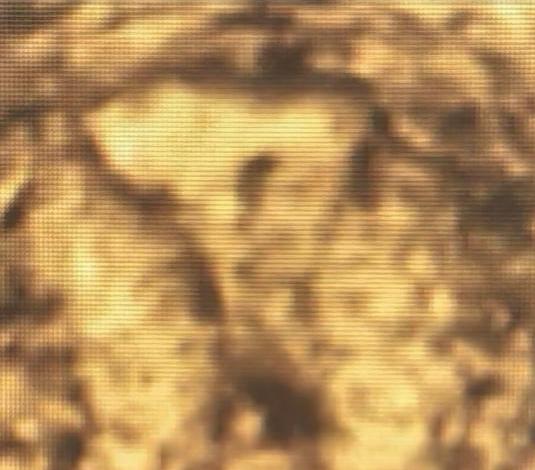
Figure 1.jpegThree-dimensional ultrasound image from the First Affiliated Hospital of Soochow University
(7) Preliminary Diagnosis
Intrauterine adhesion.
2. Diagnosis and Treatment Process
Stage 1: Pharmacological Treatment
Starting in September 2024, the patient was treated with vasodilator drugs including low-dose aspirin, vitamin C, vitamin E, coenzyme Q10, and Qilin Wan.
Stage 2: Surgical Intervention
On October 9, 2024, office vaginal endoscopy, cold knife adhesiolysis under vaginal endoscopy, and estrogen stent placement were performed in our hospital. Intraoperatively, the uterine cavity was abnormally shaped with a "cat eye sign". A columnar muscular old adhesion band was observed in the middle of the uterine cavity, extending from the anterior wall to the posterior wall, dividing the uterus into left and right uterine cavities. The bilateral tubal ostia were obscured and invisible. The endometrium was thin, pale, and poorly vascularized. Postoperatively, maintenance medication was continued: 1 tablet of Femoston 2-10 mg orally once daily, combined with vasodilator drugs such as low-dose aspirin, vitamin C, vitamin E, coenzyme Q10, and Qilin Wan.
View Video
Stage 3: PRP Treatment
Endometrial growth was unsatisfactory during follow-up after vaginal endoscopy (see figure below: endometrial thickness 3.7 mm at 1 month and 4.2 mm at 2 months after surgery), and PRP treatment was initiated.
First course of PRP intrauterine perfusion: January 6 and 8, 2025;
Second course of PRP intrauterine perfusion: February 5, 7, and 10, 2025.
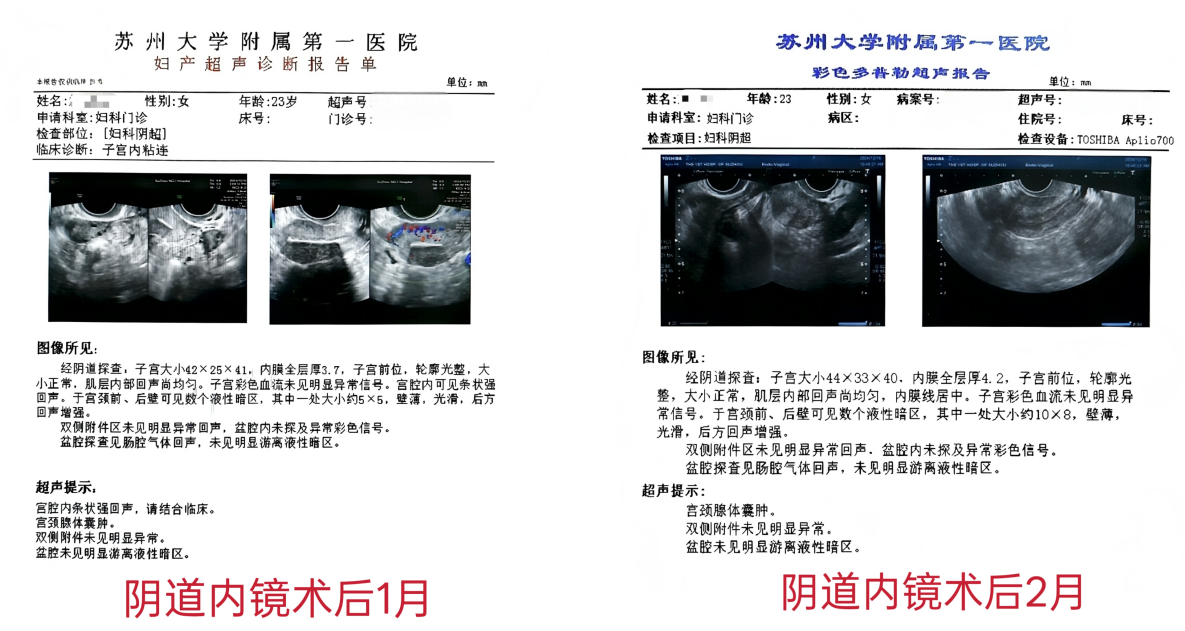
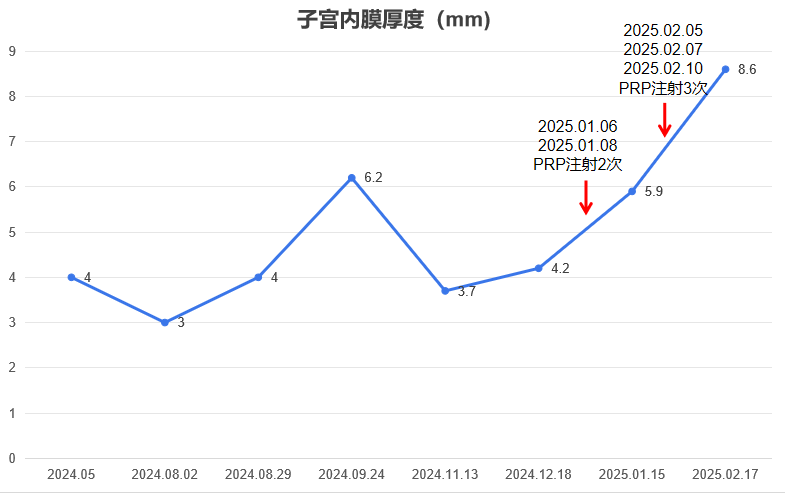
Figure 2.pngFigure 3.pngTrend of endometrial status during patient management
Outcome
✓ Endometrial thickness reached 8.6 mm after 2 courses of PRP intrauterine injection.✓ Successful pregnancy.➱ On June 13, 2025, transvaginal ultrasound confirmed intrauterine pregnancy: gestational sac 25 mm × 15 mm × 31 mm, fetal pole 6 mm, with fetal heart motion visible.
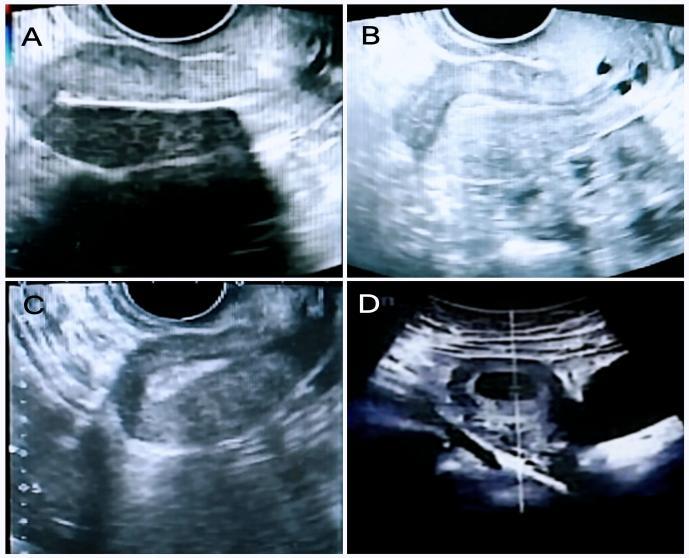
Figure 4.jpegA: 3.7 mm endometrium before PRP intrauterine perfusion; B: 5.9 mm endometrium after the first PRP intrauterine perfusion; C: 8.6 mm endometrium after the second PRP intrauterine perfusion; D: Confirmation of intrauterine pregnancy 4 months after PRP completion.
Case 2
1. Medical History
(1) Present Illness
A 35-year-old female patient, Shi, presented to our hospital complaining of amenorrhea for 3 months after missed abortion and uterine evacuation twice. The patient underwent artificial abortion in an external hospital on June 21, 2024, due to missed abortion, and developed amenorrhea for 3 months after the surgery. She was admitted to our hospital on September 13, 2024, with an ultrasound showing an endometrial thickness of 5.6 mm. She was treated with 1 tablet of Femoston 2-10 mg orally once daily for one month, but menstruation did not resume. No abdominal pain or distension occurred during this period. She was re-admitted to our hospital on October 21, 2024, and re-examination by ultrasound showed an endometrial thickness of 3.5 mm and interruption of endometrial continuity (suspicious of adhesion). The patient had a fertility requirement and sought further treatment in our hospital.
(2) Past Medical History
The patient was generally healthy, with no history of organic diseases such as cardiovascular, cerebral, pulmonary, or renal disorders; she had a cesarean section in 2017; no history of drug or food allergies; and no history of infectious diseases.
(3) Menstrual, Marital and Obstetric History
Menarche at 15 years old; menstrual cycle: 5–7 days/30 days; moderate menstrual flow; mild dysmenorrhea. Obstetric history: 1-0-2-2 (cesarean section for twin natural pregnancy in 2017; missed abortion and induced abortion in December 2023; missed abortion and induced abortion on June 21, 2024).
(4) Family History
No family history of genetic diseases.
(5) Gynecological Examination
Vulva: Married nulliparous appearance; Cervix: Smooth, with a few nabothian cysts; Uterus: Anteverted, normal size, no obvious tenderness; Bilateral adnexa: No tenderness.
(6) Auxiliary Examinations
Ultrasound in our hospital on October 21, 2024: Uterine size 37 mm × 31 mm × 40 mm, total uterine wall thickness 3.5 mm; interruption of endometrial continuity, suggestive of intrauterine adhesion.
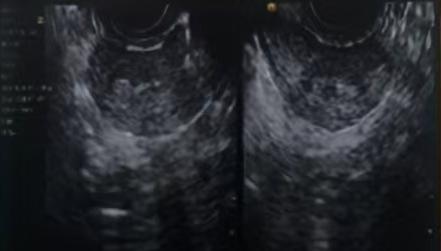
Figure 5.jpegUltrasound image from the First Affiliated Hospital of Soochow University
(7) Preliminary Diagnosis
Intrauterine adhesion.
2. Diagnosis and Treatment Process
Stage 1: Surgical Treatment
On December 2, 2024, office vaginal endoscopy, adhesiolysis under vaginal endoscopy, and placement of a disposable intrauterine supportive balloon were performed in our hospital. Intraoperatively, the uterine cavity was severely abnormally shaped, with multiple fibrinous and muscular adhesion bands in the uterine cavity, severe stenosis of the uterine cavity, bilateral tubal ostia invisible, and the endometrium pale and thin.
View Video
Stage 2: Pharmacological Treatment
Postoperative hormonal cyclic therapy: 1 tablet of Femoston 2-10 mg orally once daily, combined with vasodilator drugs such as low-dose aspirin, vitamin C, vitamin E, coenzyme Q10, and Qilin Wan.
Stage 3: PRP Treatment
The patient had menstrual flow after surgery with a small amount, and PRP intrauterine perfusion was immediately initiated (January 13 and 20, 2025).
Outcome
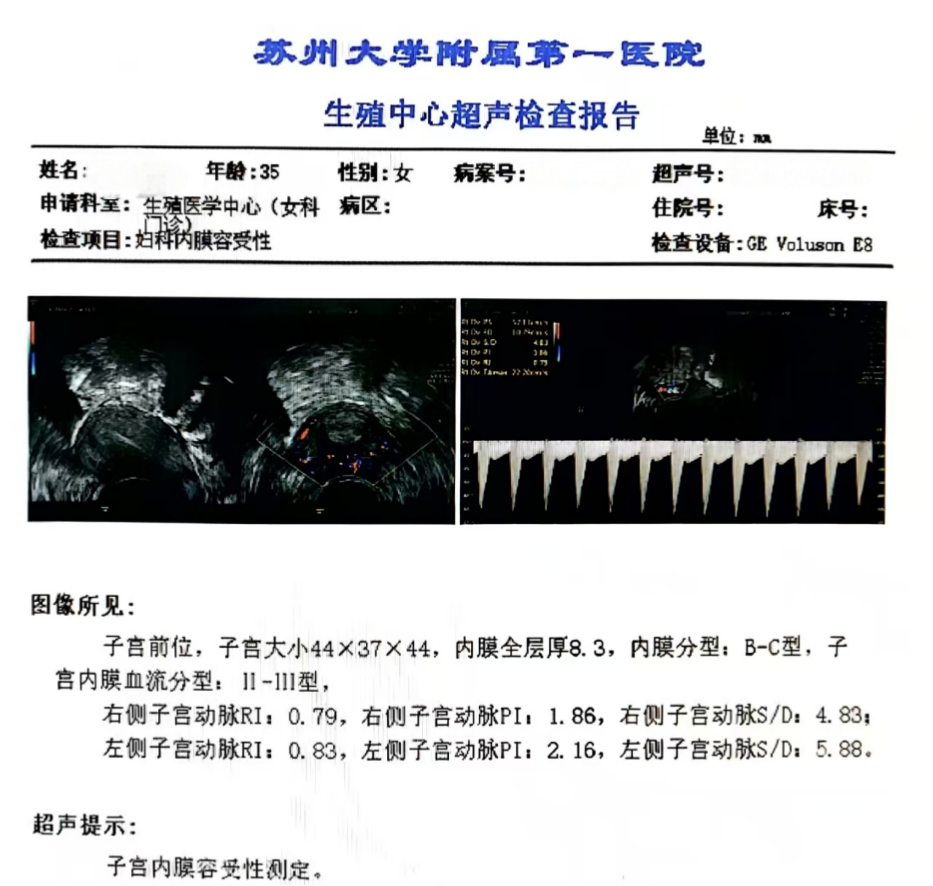
✓ Menstruation resumed with a significantly increased flow and cleared on day 7 after the first menstrual cycle following PRP treatment.✓ Endometrial status: Endometrial receptivity assessment on April 1, 2025: Endometrial thickness 8.3 mm, type B-C, blood flow type II-III.
Extended Discussion
The successful experience of these cases reflects the all-round transformation of the diagnosis and treatment of intrauterine adhesions from the three dimensions of prevention, diagnosis, and treatment. IUA is mostly secondary to intrauterine operations, and the incidence of IUA caused by multiple induced abortions and curettage is as high as 25%–30%. Due to the organization of embryonic tissue, missed abortion often leads to tight adhesion with the uterine wall, and repeated curettage is often required during uterine evacuation, causing irreversible damage to the basal layer of the endometrium. If complicated with infection, the incidence of adhesion is higher. Both patients above developed amenorrhea or oligomenorrhea after induced abortion for missed abortion. Therefore, the concept of protective uterine curettage should be advocated in clinical practice. For high-risk cases, drug pretreatment (e.g., mifepristone combined with misoprostol) should be prioritized to loosen the tissue sufficiently, and precise uterine aspiration should be performed under ultrasound guidance or direct visualization during surgery to avoid blind and aggressive curettage. Endometrial repair should be evaluated in a timely manner after surgery. For patients with fertility requirements, early intervention should be carried out; intraoperative preventive placement of anti-adhesion materials can be considered, and estrogen and other drugs should be administered in a timely manner after surgery to promote endometrial repair and prevent the progression of adhesions from mild to severe.
Both cases were diagnosed and treated in the outpatient department through vaginal endoscopy technology, reflecting the future trend of minimally invasive gynecology. The traditional inpatient surgical model increases patients' fear and medical costs due to anesthesia and cervical dilatation. Office vaginal endoscopy (office hysteroscopy) does not require anesthesia or cervical clamping, achieving zero-distance diagnosis and treatment. The promotion of this "same-day diagnosis and treatment" model is conducive to the early diagnosis and timely intervention of IUA, and cold knife adhesiolysis reduces thermal injury. The two patients above underwent cold knife adhesiolysis for intrauterine adhesions under vaginal endoscopy in the outpatient department, with synchronous placement of estrogen stents and dilatation balloons, reflecting the advantages of safety, efficiency, and minimal invasiveness of this technology.
For patients with established adhesions and severe endometrial damage, single pharmacological treatment is often ineffective. After adhesiolysis, both patients above had a poor response of the endometrium to conventional drugs. We adopted PRP intrauterine perfusion treatment. After 1–2 courses of intervention, the endometrium recovered to normal, menstrual flow increased, and successful pregnancy was finally achieved.
Summary
PRP is not only a concentration of platelets but also a collection of various endogenous growth factors (VEGF, PDGF, TGF-β, etc.). It induces the proliferation of endometrial stromal stem cells and promotes angiogenesis, thereby reconstructing the endometrial microenvironment and exerting effects on promoting cell proliferation, migration, and tissue regeneration. It is particularly suitable for drug-resistant thin endometrium and endometrial regeneration dysfunction after adhesion surgery. With the characteristics of autologous origin, high safety, and simple operation, it provides a new treatment idea for clinical practice.
The diagnosis and treatment of intrauterine adhesions cannot be solved by a single surgery or a single drug. Especially for patients with fertility requirements, the management should be systematic and individualized. A coherent diagnosis and treatment pathway covering multiple links such as surgical prevention, precise diagnosis, minimally invasive treatment, and promotion of endometrial regeneration can maximize the recovery of endometrial function and improve the success rate of pregnancy. The success of the above cases benefits from the multi-dimensional comprehensive management model of accurate separation by vaginal endoscopy + sequential hormonal support + PRP biological repair. On the basis of establishing the physical space after TCRA, the "biological deep plowing" by PRP activates the residual basal layer cells. For severe cases, multi-point injection can be adopted to allow growth factors to penetrate into the lower endometrium, thereby breaking the "ceiling" of endometrial growth. The exploration and practice of our hospital in this regard are expected to provide useful references for the clinical management of similar patients.
References:
[1].中华医学会妇产科学分会, 宫腔粘连临床诊疗中国专家共识. 中华妇产科杂志, 2015. 50(12): 第881-887页.
[2]. 中华医学会计划生育学分会与中国优生优育协会生育健康与出生缺陷防控专业委员会, 中期妊娠稽留流产规范化诊治的中国专家共识. 中国实用妇科与产科杂志, 2021. 37(9): 第928-932页.
[3]. 中华医学会计划生育学分会, 早期妊娠稽留流产治疗专家共识. 中国实用妇科与产科杂志, 2020. 36(1): 第70-73页.
[4]. 中华医学会计划生育学分会, 流产手术后促进子宫内膜修复临床实践指南(2025年版). 中华妇产科杂志, 2025. 60(9): 第687-695页.
[5]. 张浩, 魏莉与冯力民, 阴道内镜技术中国专家推荐意见. 中国医刊, 2022. 57(2): 第129-133页.
[6]. 中国输血协会临床输血管理学专业委员会富血小板血浆创新技术专家联盟子宫修复项目组, 自体单采富血小板血浆治疗薄型子宫内膜的专家共识. 临床输血与检验, 2023. 25(3): 第289-296页.
Author Introduction
Dr. ZHA Xueli
Attending Physician, Department of Obstetrics and Gynecology, the First Affiliated Hospital of Soochow University; Master of Medicine
Member of the Professional Committee on Women's Whole Lifecycle Health, Suzhou Anti-Aging Association
Second Prize of Suzhou Maternal and Child Health Skills Competition
Supervisor
Prof. ZHANG Hong
Chief Physician, Master Supervisor, Department of Obstetrics and Gynecology, the First Affiliated Hospital of Soochow University
Member of the Professional Committee on Integrated Prevention and Treatment of Endometrial Diseases, Jiangsu Maternal and Child Health Commission
Member of the Professional Committee on Minimally Invasive Gynecological Surgery, Jiangsu Maternal and Child Health Association
Member of the Gynecological Endocrinology Capacity Building Group, Jiangsu Province
Member of the Professional Committee on Maternal and Child Traditional Chinese Medicine, Jiangsu Maternal and Child Health Research Association
Member of the Functional Repair Branch, China Association of Geriatric Health Care
Member of the Menopause and Gynecological Endocrinology Branch, China Association of Geriatric Health Care
Member of the Endocrinology Group, Obstetrics and Gynecology Branch of Suzhou Medical Association
Member of the Gynecological Tumor Prevention and Control Committee, Suzhou Preventive Medicine
Association
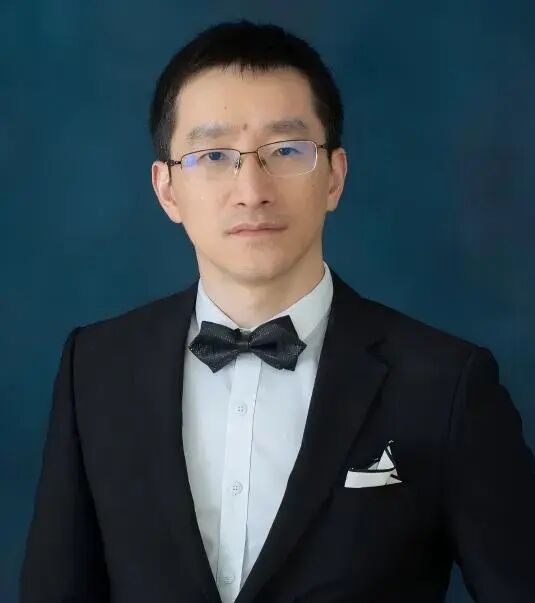
Prof. ZHOU Jinhua
Chief Physician, Professor, Doctoral Supervisor, Postdoctoral Supervisor; Deputy Director of the Department of Obstetrics and Gynecology, the First Affiliated Hospital of Soochow University; Doctor of Medicine, MD
Member of the Young Group, Gynecological Oncology Branch of Chinese Medical Association
Vice Chairman of the Obstetrics and Gynecology Branch of Suzhou Medical Association
Deputy Director of Suzhou Gynecological Medical Quality Control Center
Deputy Director of the Gynecological Oncology Professional Committee, Jiangsu Research Hospital Association
Deputy Director of the Youth Committee, Gynecological Oncology Branch of Jiangsu Anti-Cancer Association
Digital Editorial Board Member of the 10th Edition of Obstetrics and Gynecology (People's Medical Publishing House)
Trainee of the Jiangsu "333 Talent Project"
Key Talent of Jiangsu Maternal and Child Health
Key Young Medical Talent of Jiangsu Province
He has presided over 3 projects of the National Natural Science Foundation of China, published more than 20 SCI papers as the first/corresponding author (including co-corresponding author), with a total impact factor of over 180 points, including 5 papers with an impact factor over 10. He has obtained 1 national invention patent and successively won awards such as the Natural Science Award of National Maternal and Child Health, Jiangsu Science and Technology Award, and Jiangsu Medical Science and Technology Award.
Image Source: The First Affiliated Hospital of Soochow University
Editor-in-Charge: Lily