














For a long time, radical hysterectomy has been the cornerstone of treating early-stage cervical cancer, with its development evolving over a century. However, the traditional surgical model has always faced a dilemma of trade-off between pursuing radical resection scope, preserving organ function, and reducing surgical trauma. Recently, jointly led by the Gynecologists and Obstetricians Branch of the Chinese Medical Doctor Association and the Minimally Invasive and Non-invasive Medicine Professional Committee of the Chinese Medical Doctor Association, together with domestic experts in gynecologic oncology and anatomy, based on comprehensive existing evidence and clinical experience, a new concept of radical hysterectomy based on the mesoanatomy theory has been proposed—namely, the "embryonic unit" radical hysterectomy of the entire Müllerian duct, referred to as total Müllerian duct compartment resection (TMCR). This marks a profound transformation in the surgical concept of cervical cancer. This article aims to conduct an in-depth interpretation of this consensus, analyzing its core essence and clinical value.
I. Dilemma and Breakthrough: From "Empirical Dissection" to Precise Resection at the "Embryonic Development Level"
Traditional surgery mainly determines the resection scope based on gross anatomical landmarks and the surgeon's experience, such as the Piver or Querleu-Morrow classification, which is essentially a macroscopic resection targeting "visible organs." This model has two major limitations: first, the resection margin may be histologically incomplete, posing a risk of microscopic tumor residue; second, to achieve a sufficient resection range, extensive division of vascular and neural networks is often required, leading to increased bleeding, high complication rates, and neurofunctional damage that affects patients' quality of life.
The proposal of TMCR is a systematic response to this dilemma. Its theoretical core, the mesoanatomy theory, shifts the surgical perspective from the organ level to the embryonic development level. The consensus points out that the female reproductive tract originates from the "embryonic unit" of the Müllerian duct. During development, this unit is completely encapsulated by its own membranous structures (such as fascia and mesentery) and connected to adjacent "embryonic units" (e.g., bladder and rectum) through "membranous bridges." Cervical cancer is essentially a disease that occurs and progresses within this specific "embryonic unit." Therefore, the goal of TMCR has undergone a fundamental transformation: from "resecting a sufficient range of organs and surrounding tissues" to "completely resecting the entire embryonic development unit from which the tumor originates."
II. Core Technology: Achieving Complete Isolation and Resection of the "Embryonic Unit" Guided by "Embryonic Unit Membranous Spaces"
The essence of TMCR lies in the refined and sequential handling of three major regions of parametrial tissue, which is systematically standardized in the consensus:
01 Lateral Parametrium: Precise Closure of the "Envelope" Inlet and Outlet
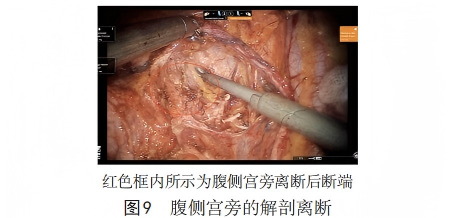
The consensus regards the lateral parametrium as the inlet and outlet of the "envelope" of the Müllerian duct embryonic unit, which is the main pathway for tumor spread. Instead of blind clamping and transection, the surgery accurately dissects embryonic fusion spaces such as the paravesical space and Latzko pararectal space, similar to opening along the adhesive seam of an envelope, to dissociate the "envelope" (Müllerian duct unit) from surrounding structures. Finally, the inlet and outlet are transected under direct vision, ensuring resection completeness while clearly exposing the pelvic plexus, laying the foundation for function preservation.
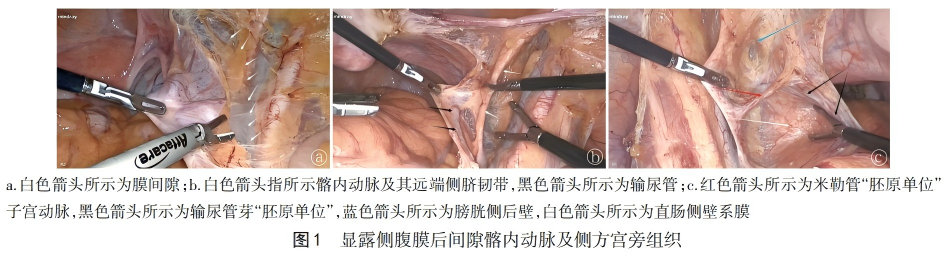
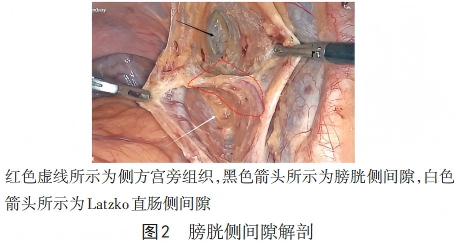
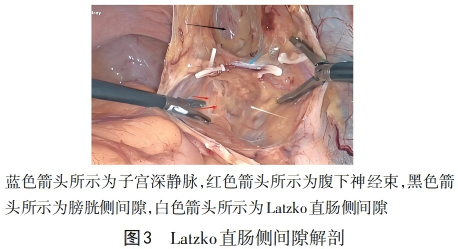
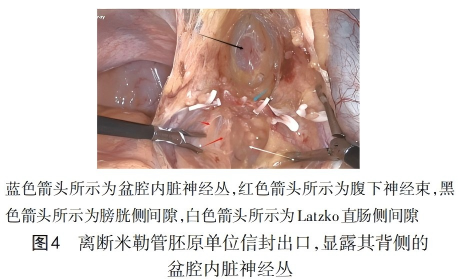
02 Dorsal and Ventral Parametrium: Bloodless Dissection Along "Membranous Bridges"
For the dorsal parametrium (uterosacral ligament) and the most complex ventral parametrium, the consensus emphasizes sharp dissection as the primary approach. The surgery begins with transecting obvious "membranous bridge" structures such as the rectovaginal fold peritoneum or vesicouterine fold peritoneum, thereby entering natural, avascular "fusion" spaces (e.g., rectovaginal space, vesicocervical/vaginal space, "fourth space," paravaginal space). Dissection along these natural embryonic planes enables nearly bloodless anatomy, gradually exposing and transecting various extraperitoneal membranous bridge structures, ultimately achieving complete isolation of the Müllerian duct unit.
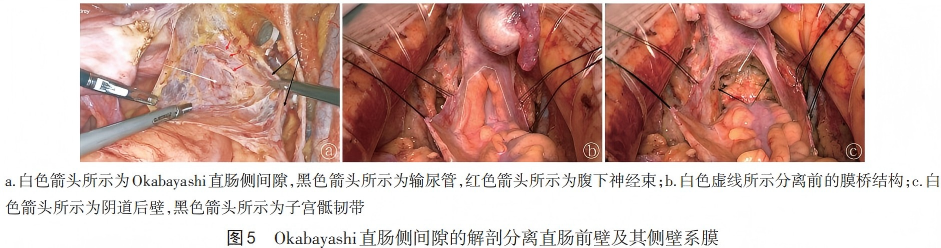
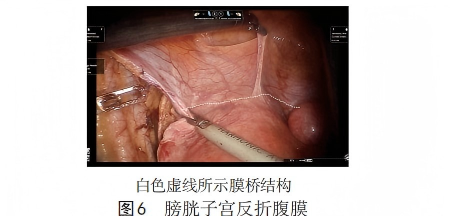
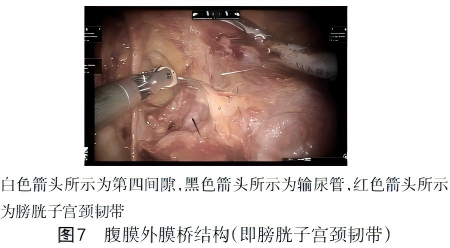
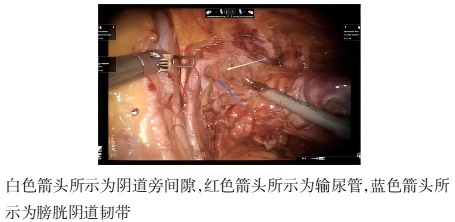
03 Sublimation of Nerve Preservation: The "Three-Plane" Dissection Method
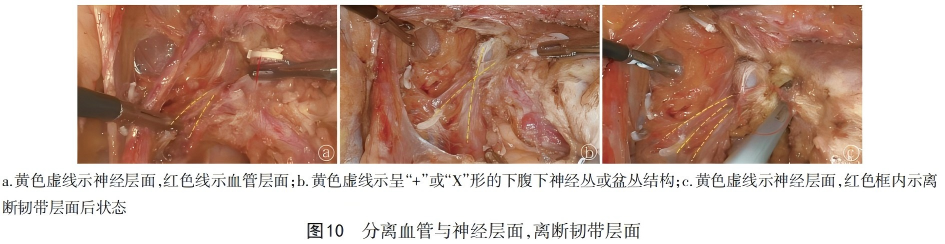
The consensus innovatively proposes the "three-plane" dissection method for paravaginal connective tissue: vascular plane, neural plane, and ligamentous plane. This represents a refined and visualized upgrade of the traditional "neural plane" preservation technique. Surgeons first handle the vascular plane, lifting it inward to expose the "cross-shaped" pelvic plexus formed by the convergence of the hypogastric nerve bundle and pelvic splanchnic nerve plexus under direct vision. Subsequently, the nerve branches innervating the bladder can be accurately separated and preserved, while those leading to the cervix and vagina are transected. This method transforms nerve preservation from "empirical avoidance" to "visual screening," greatly improving the success rate and certainty of protection.
III. Core Value: Reshaping the "Tumor-Free Principle" of Oncologic Surgery
The TMCR consensus is not only a technical guideline but also a deepening and reshaping of the fundamental principle of oncologic surgery—the "tumor-free principle."
"Radicality" of Histological Margins: TMCR pursues negative margins at the histoembryological level, which is more thorough and scientific than the traditional gross margin negativity, theoretically minimizing the risk of "in situ" recurrence.
"Defensiveness" in Operation: The consensus integrates the tumor-free principle into every detail: avoiding tumor compression during surgery, blocking blood vessels before dissection, sealing and irrigating the vagina before transection, and performing sharp space dissection throughout. Special emphasis is placed on the integrity of membranous structures, as the intact enveloping membrane serves as the best barrier against tumor cell dissemination; any tearing or damage may lead to "cancer leakage."
New Connotation of "En Bloc Resection": TMCR achieves a leap from "organ en bloc resection" to "embryonic unit en bloc resection," providing clear histoembryological theoretical support for the principle of embryonic unit en bloc resection.
Conclusion
The release of the Chinese Expert Consensus on the Technical Implementation Specifications of Radical Hysterectomy Based on Mesoanatomy (2025 Edition) provides a new theoretical framework and technical pathway for the precision and standardization of cervical cancer surgery. While ensuring excellent oncological outcomes, it significantly reduces intraoperative bleeding, lowers complications such as ureteral injury, and better preserves bladder, rectal, and sexual functions, truly achieving a win-win situation between "radical cure" and "quality of life." It is a milestone in the field of surgical treatment for cervical cancer. It leads the surgical concept from macroscopic empirical resection to precise radical resection guided by micro-histoembryology, driving gynecologic oncology surgery toward a new era of greater precision, standardization, and humanization. In the future, with the coordinated advancement of theoretical popularization, technical training, and clinical research, TMCR is expected to evolve from an innovative technology to a new standard for the surgical treatment of early-stage cervical cancer.
This consensus was originally published in Chinese Journal of Practical Gynecology and Obstetrics, 2025, 41(12): 1210-1217.
DOI: 10.19538/j.fk2025120113
【Citation】Gynecologists and Obstetricians Branch of the Chinese Medical Doctor Association, Minimally Invasive and Non-invasive Medicine Professional Committee of the Chinese Medical Doctor Association. Chinese Expert Consensus on the Technical Implementation Specifications of Radical Hysterectomy Based on Mesoanatomy (2025 Edition) [J]. Chinese Journal of Practical Gynecology and Obstetrics, 2025, 41(12): 1210-1217.
Consensus Authors: Gynecologists and Obstetricians Branch of the Chinese Medical Doctor Association, Minimally Invasive and Non-invasive Medicine Professional Committee of the Chinese Medical Doctor Association.
Funding Projects: Key Research and Development Program of Liaoning Province Science and Technology Plan Joint Program (2025110052-JH2/1018); Central High-Level Hospital Clinical Research Special Project of Peking Union Medical College Hospital (2025-PUMCH-C-029); China Youth Medical Innovation Research Project (11th Phase) (P241217108737); 2022 Liaoning Provincial Department of Education Project (LJKZZ20220101).
Corresponding Authors:
Wang Jun, Department of Obstetrics and Gynecology, The Second Affiliated Hospital of Dalian Medical University, Dalian 116000, Liaoning Province, China. Email: wj202fck@163.com.
Xiang Yang, Peking Union Medical College Hospital, Chinese Academy of Medical Sciences & Peking Union Medical College, Beijing 100730, China. Email: Xiang Y@pumch.com.
Di Wen, Renji Hospital, Shanghai Jiao Tong University School of Medicine, Shanghai 200001, China. Email: diwen163@163.com.
Han Shichao, Department of Obstetrics and Gynecology, The Second Affiliated Hospital of Dalian Medical University, Dalian 116000, Liaoning Province, China. Email: hscsuperman@126.com.
Zhang Shiqian, Qilu Hospital of Shandong University, Jinan 250012, Shandong Province, China. Email: r370112@126.com.
Consensus Writers: Han Shichao (The Second Affiliated Hospital of Dalian Medical University); Wang Jun (The Second Affiliated Hospital of Dalian Medical University); Xiang Yang (Peking Union Medical College Hospital, Chinese Academy of Medical Sciences & Peking Union Medical College); Di Wen (Renji Hospital, Shanghai Jiao Tong University School of Medicine); Na Jing (The Second Affiliated Hospital of Dalian Medical University); Zhang Shiqian (Qilu Hospital of Shandong University).
Expert Profiles

Han Shichao, Professor
Director of the Gynecologic Oncology Surgery Training Center, Chief Physician, Master's Supervisor, Visiting Scholar in Gynecologic Oncology at MD Anderson Cancer Center, USA.
Academic Appointments:
Standing Committee Member, Reproductive Endocrinology Professional Committee of China Medical Education Association.
Committee Member, Obstetrics and Gynecology Branch of Chinese Research Hospital Association.
Committee Member, Minimally Invasive and Non-invasive Medicine Professional Committee of Chinese Research Hospital Association.
Committee Member, Gynecologic Oncology Branch of Chinese Geriatrics Society.
Chairman, Gynecologic Oncology and Tumor Cytology Professional Committee of Liaoning Provincial Society of Cell Biology.
Vice Chairman, Minimally Invasive and Non-invasive Gynecologic Oncology Professional Committee of Liaoning Maternal and Child Health Association.
Vice Chairman, Youth Committee of Minimally Invasive Gynecology Branch of Liaoning Medical Association.
Vice Chairman, Youth Committee of Obstetrics and Gynecology Branch of Liaoning Medical Association.
Editor-in-Chief Works:
English monograph "Open, Laparoscopic, and Robotic Surgery for Cervical Cancer" (published globally by Springer Publishing Group).
"Atlas of Cervical Cancer Surgery" (People's Medical Publishing House).
"Atlas of Ovarian Cancer Surgery" (People's Medical Publishing House).
"Practical Analysis of Cervical Cancer Surgery" (co-published by People's Medical Publishing House and People's Medical Electronic & Audio-Visual Publishing House).
"Practical Analysis of Ovarian Cancer Surgery" (co-published by People's Medical Publishing House and People's Medical Electronic & Audio-Visual Publishing House).
Writer of the Consensus: Chinese Expert Consensus on the Technical Implementation Specifications of Radical Hysterectomy Based on Mesoanatomy (2025 Edition).

Wang Jun, Professor
Director of the Department of Obstetrics and Gynecology, The Second Affiliated Hospital of Dalian Medical University, Doctoral Supervisor.
Academic Appointments:
Committee Member, First Committee of Medical Robot Physicians Branch of Chinese Medical Doctor Association.
Committee Member, Reproductive Health Branch of Chinese Preventive Medicine Association.
Vice Chairman, Obstetrics and Gynecology Professional Committee of China Medical Device Industry Association.
Vice Chairman, Reproductive Endocrinology Professional Committee of China Medical Education Association.
Vice Chairman, Obstetrics and Gynecology Branch of Liaoning Medical Association.
Vice Chairman, Minimally Invasive Gynecology Branch of Liaoning Medical Association.
Vice President, Obstetrics and Gynecology Branch of Liaoning Medical Doctor Association.
Chairman, Minimally Invasive and Non-invasive Gynecologic Oncology Professional Committee of Liaoning Maternal and Child Health Association.
Editor-in-Chief Works:
"Atlas of Cervical Cancer Surgery" (People's Medical Publishing House).
"Atlas of Ovarian Cancer Surgery" (People's Medical Publishing House).
"Practical Analysis of Cervical Cancer Surgery" (People's Medical Electronic & Audio-Visual Publishing House).
"Practical Analysis of Ovarian Cancer Surgery" (People's Medical Electronic & Audio-Visual Publishing House).
Academic Experience: Visiting scholar at Pacific Medical Center (San Francisco, USA), Charité - Universitätsmedizin Berlin (Germany), and Oslo University Hospital (Norway). He performed the first gynecologic robotic surgery in Northeast China in 2013 and the first 5G+ remote gynecologic robotic surgery in Northeast China in 2024. He was awarded the "Outstanding Contribution Award for the 100,000th Da Vinci Surgery Milestone in China" and the "People's Good Doctor Special Contribution Award in Obstetrics and Gynecology" in 2023.
Image and Text Source: Gynecologists and Obstetricians Branch of the Chinese Medical Doctor Association, Minimally Invasive and Non-invasive Medicine Professional Committee of the Chinese Medical Doctor Association. Chinese Expert Consensus on the Technical Implementation Specifications of Radical Hysterectomy Based on Mesoanatomy (2025 Edition) [J]. Chinese Journal of Practical Gynecology and Obstetrics, 2025, 41(12): 1210-1217.
Editor: Lily