Retained placenta is a major cause of postpartum hemorrhage, and its timely and appropriate management is directly related to maternal life safety. It is defined as failure of placental expulsion within 30 minutes after fetal delivery despite active management of the third stage of labor (use of uterotonics, controlled cord traction). The NICE guidelines recommend diagnosing retained placenta if the placenta is not expelled within 30 minutes of active management or 60 minutes of expectant management.
01 Classification of Retained Placenta
Retained placenta is categorized into three types (see Figure 1), and accurate identification is crucial for selecting appropriate management strategies:
- Placental Incarceration: The placenta is completely detached from the uterine wall but cannot be expelled due to cervical contraction and closure. Examination reveals signs of placental separation (e.g., umbilical cord lengthening, slight vaginal bleeding), but the placenta cannot pass through the narrowed cervix.
- Placental Adhesion: The placenta is incompletely detached but has a separable interface, mostly due to uterine atony, and can be manually removed.
- Placenta Accreta Spectrum (PAS): Abnormal invasion of placental villi into the uterine myometrium with lack of a natural separation interface, including adherent, invasive, and percreta placenta. Forcible separation is prone to causing life-threatening massive hemorrhage.

Figure 1. Three types of retained placenta. (A) Placental adhesion (B) Focal placenta accreta (C) Incarcerated placenta
Source: UpToDate - Retained Placenta After Vaginal Delivery
Identification Methods:
- Clinical Manifestations: Typical signs of placental separation (umbilical cord lengthening, vaginal gushing bleeding, elevated and firm uterine fundus) with unexpelled placenta, and palpable placental edge at the narrowed cervical os indicate placental incarceration. Absence of these signs suggests possible placental adhesion or PAS.
- Ultrasonography: Differentiates incarceration from adhesion and assesses the possibility of PAS (e.g., intraplacental lacunar blood flow signals).
- Intraoperative Exploration: The placenta fuses with the uterine wall, and forcible separation may cause fatal bleeding. If no separation interface is found during manual placental removal, the procedure should be stopped immediately to alert for PAS.
02 High-Risk Factors for Retained Placenta
(1) Use of ergometrine may cause cervical closure while the placenta detaches, leading to placental incarceration; oxytocin use for induction or augmentation of labor.(2) Uterine abnormalities: e.g., bicornuate uterus, septate uterus, or arcuate uterus.(3) Potential placental implantation defects: hypertensive disorders of pregnancy, stillbirth, placental abruption, fetal growth restriction/small for gestational age.(4) Preterm birth, previous history of retained placenta, previous cesarean section, curettage or myomectomy, maternal age ≥30 years, delivery in a teaching hospital, etc.
03 First-Line Intervention: Continuous Cord Traction
Phase 1: Initial Assessment
- Life Support: Establish venous access, administer fluid replacement, monitor vital signs and urine output, and empty the bladder.
- Team Collaboration: Consult anesthesiology, blood bank, and high-risk obstetrics team if necessary.
- Laboratory Tests: Urgent complete blood count, coagulation function, and cross-matching.
- Medication Preparation: Prepare uterotonics (oxytocin, carboprost, etc.) and tranexamic acid (TXA).
Phase 2: First-Line Intervention - Continuous Cord Traction
➱ Indications: Simple retention or with active bleeding.
- Routine Method: Fix the uterine fundus with one hand abdominally to prevent uterine inversion, and pull the umbilical cord continuously downward parallel to the birth canal with the other hand, taking care not to rupture the cord.
- Windmill Technique: Pull the umbilical cord perpendicular to the birth canal, and slowly rotate the clamped end of the cord 360° clockwise around the vaginal opening until placental expulsion (see Figure 2).
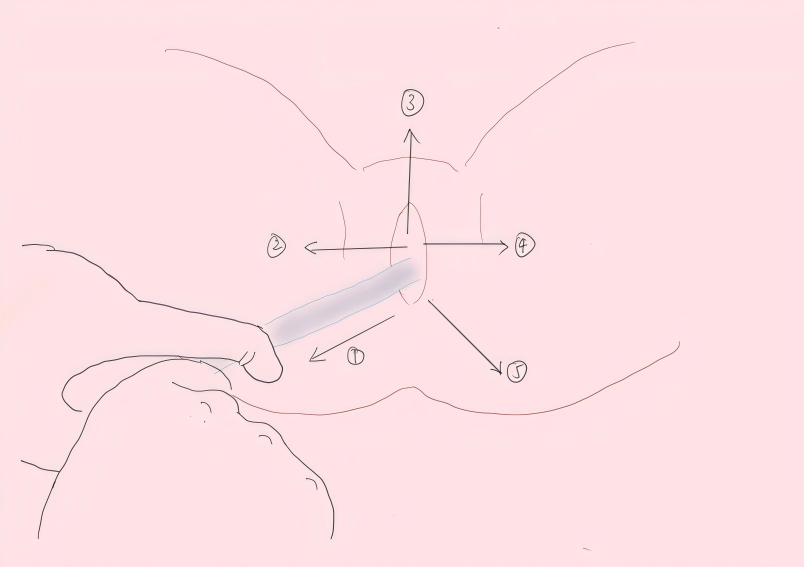
Figure 2. Schematic diagram of the Windmill technique drawn by the author
Click ☟ below to view the original reference image:The Windmill technique avoids manual removal of the retained placenta A new solution for an old problem.pdf
Phase 3: Escalation of Intervention
Pharmacological Combined Treatment for Persistent Bleeding:
(1) Oxytocin + carboprost tromethamine. Avoid ergometrine, as it may cause cervical contraction and increase the difficulty of manual placental removal.(2) Tranexamic acid: 1g intravenous bolus (within 3 hours of bleeding).
Management of Excessive Contraction of the Lower Uterine Segment/Cervix
Nitroglycerin can be administered intravenously (50μg/min, maximum cumulative dose 250μg) to relax the uterine myometrium and cervical smooth muscle, facilitating manual placental removal. Monitor blood pressure to avoid hypotension, headache, and other side effects. A recent meta-analysis published in American Journal of Obstetrics and Gynecology MFM revealed that nitroglycerin does not reduce the rate of manual removal and shows no significant advantage in promoting natural placental expulsion.
Manual Placental Removal
If continuous cord traction and pharmacological treatment fail, manual placental removal may be performed.➱ Key Preparations:(1) Adequate Analgesia/Anesthesia: Epidural, intravenous, or general anesthesia.(2) Aseptic Technique: Perform in the operating room or delivery room with strict disinfection to prevent infection; equip with appropriate medical staff, medications, and equipment to manage complications.(3) Prophylactic Antibiotic Therapy: Single-dose broad-spectrum antibiotics such as ampicillin or first-generation cephalosporins; clindamycin for penicillin allergy.(4) Technical Points: Empty the bladder. Insert one hand into the uterine cavity along the umbilical cord, locate the maternal surface of the placenta, find the placental edge and separation interface with the ulnar edge of the palm, and gently separate the placenta by moving fingers laterally. Fix the uterine fundus with the other hand abdominally. After most of the placenta is separated, pull the umbilical cord with one hand, hold the placenta in the palm, and pull it out downward while rotating. Check the integrity of the placenta and explore the uterine cavity after removal.(5) Postoperative Management: Immediately enhance uterine contraction (intravenous oxytocin infusion) and massage the uterus.
Management of Refractory Cases:
(1) Instrumental Removal After Failed Manual Removal: Use ring forceps to remove the placenta in pieces or completely.(2) Incomplete Separation Found Clinically: Slow and gentle re-finger separation to create a separation interface may be performed. If residual placental tissue remains, uterine contraction is good, and there is no uterine subinvolution or postpartum hemorrhage at the residual site, curettage should be avoided to reduce the risk of intrauterine adhesions (Asherman syndrome). If excessive bleeding persists, curettage or aspiration is required to remove residual placental tissue.
Hemostasis Methods for Persistent Bleeding After Placental Removal:
- Intrauterine balloon tamponade (e.g., Bakri balloon).
- Aortic compression to block pelvic blood flow if bleeding cannot be controlled; assess maternal hemodynamics and arrange laparotomy if necessary.
- Interventional Therapy: Uterine artery embolization (UAE) is suitable for hemodynamically stable patients.
- Surgical Hemostasis: Hysterectomy is the final resort.
04 Management of Placenta Accreta Spectrum (PAS)
PAS includes adherent placenta, invasive placenta, and percreta placenta. Patients suspected of PAS based on clinical risk factors and ultrasound findings should be informed of the diagnosis and risks, and a delivery plan with contingency measures should be formulated in advance. If PAS is identified during manual placental removal (no separation interface between the uterus and placenta), manual separation should be stopped immediately to avoid forcible detachment. Activate the multidisciplinary team (MDT): including obstetrics, anesthesiology, interventional radiology, urology, transfusion medicine, and ICU.
Timing of Delivery:
For stable patients without bleeding or preterm labor, planned delivery at 34-35+6 weeks of gestation is recommended (UpToDate), while Chinese guidelines suggest 34-37 weeks for stable cases. The optimal timing of delivery is controversial and should be individualized.
Management Options:
- Hysterectomy: Preferred for severe PAS, patients without fertility requirements, or unstable hemodynamics unresponsive to conservative measures.
- Conservative Treatment for Adherent Placenta (limited to experienced centers, use with caution; inform patients of unpredictable outcomes including severe infection, secondary massive hemorrhage, and hysterectomy due to conservative failure):Placental retention in situ + expectant management; use uterotonics, compression sutures (during cesarean section), intrauterine balloon tamponade, uterine artery embolization, or uterine artery ligation as appropriate. Methotrexate adjuvant therapy is not recommended, as there is no strong evidence of improved outcomes for in-situ placenta and it may cause drug-related side effects.
- Placental Removal with Uterine Preservation: For PAS with well-demarcated local adhesion areas (<50% of the anterior uterine wall), local uterine wedge resection + repair may be performed during cesarean section as appropriate.
- Preoperative Placement of Abdominal Aorta/Internal Iliac Artery Balloons: Reduces intraoperative bleeding.
05 Retained Placenta After Second-Trimester Delivery Without Severe Bleeding
The incidence of retained placenta after second-trimester delivery is high, but the postpartum hemorrhage rate is low. The waiting time can be prolonged, but it is recommended to initiate management within 2 hours to reduce the risk of infection.
Summary:
Management of retained placenta should be based on risk assessment, rapid identification, and hierarchical intervention:
- Anticipate high-risk factors and screen for PAS via prenatal ultrasound.
- Follow the algorithm: stabilize vital signs → cord traction (for simple retention) → escalate to manual placental removal.
- Early identification of PAS: immediately stop the procedure, activate MDT, and decide on hysterectomy or conservative surgery.
- Multidisciplinary collaboration and standardized protocols are key to ensuring maternal and infant safety.
References:
1. Hinkson L, Suermann MA, Hinkson S, Henrich W. The Windmill technique avoids manual removal of the retained placenta-A new solution for an old problem. Eur J Obstet Gynecol Reprod Biol. 2017 Aug;215:6-11. doi: 10.1016/j.ejogrb.2017.05.028. Epub 2017 Jun 1. PMID: 28591673.
2.Petrecca A, Saccone G, Berghella V. Nitroglycerine for retained placenta: a meta-analysis of randomized controlled trials. Am J Obstet Gynecol MFM 2025; 7:101605.
3. Petrecca A, Saccone G, Berghella V. Nitroglycerine for retained placenta: a meta-analysis of randomized controlled trials. Am J Obstet Gynecol MFM. 2025 Jun;7(6):101605. doi: 10.1016/j.ajogmf.2025.101605. Epub 2025 Jan 14. PMID: 39818273.
4. 经阴道分娩后胎盘滞留. UpToDate. 2025-06-12
5.粘连性胎盘谱系疾病的处理. UpToDate. 2025-08-12.
6.中期妊娠终止:药物流产.UpToDate. 2025-01-14.
7. 中华医学会妇产科学分会. 胎盘植入性疾病诊断和处理指南(2023)[J]. 中华妇产科杂志, 2023, 58(6): 401-410.
Author Biography
Editor: Lily